Health & Wellness
Vape Nation: Are THC Cartridges a Safe Hit or a Health Risk?


By Dr. Alex Rodriguez – Special to The Plug’s Pages
⸻
The Puff, the Myth, the Mystery
The THC vape cartridge has become the go-to move for modern stoners: no lighter, no smell, no ash — just a discreet little cloud that says, “I might be high, or maybe I just like tropical mango-flavored air.”
But behind the sleek glass carts and clever branding, a question lingers: are we inhaling pure plant power, or slowly seasoning our lungs like cast-iron skillets with mystery metals?
⸻
What the Science (and the Streets) Are Saying
Let’s clear the smoke: not all vapes are created equal.
• Legit, Regulated Carts: Licensed brands in legal states are held to strict lab-testing standards. They’re checking for pesticides, solvents, heavy metals, and ensuring that the THC oil isn’t spiked with sketchy fillers. For most consumers, these products are considered relatively safe when used in moderation — emphasis on relatively, because inhaling anything besides oxygen carries some risk.
• Black Market Carts: This is where things get spicy — and not in a good way. Bootleg carts have been found to contain vitamin E acetate, a cheap cutting agent that caused the infamous 2019 “EVALI” outbreak (you know, the one that sent thousands to the hospital with damaged lungs). Some even contained pesticides, diluents, or leftover solvents that should never be anywhere near your lungs.
Bottom line: if you’re buying THC carts from your buddy’s cousin who “knows a guy,” you’re gambling harder than someone dropping $1,000 on a slot machine at 3 a.m.
⸻
Metals, Popcorn Lung, and Other Buzzkills
You’ve probably heard scary rumors about metals leaching into vape oil or “popcorn lung” from vapes. Here’s the deal:
• Metals: There have been legit concerns about lead, nickel, and chromium leaching from poorly manufactured cartridges when they get hot. Most licensed producers in legal states test for this, but black market carts? Not so much.
• Popcorn Lung: This came from diacetyl, a buttery-flavored chemical once used in some nicotine vapes. Most legal THC brands don’t use it, and the risk is currently considered very low.
So, no, not every THC vape is secretly plotting against your lungs — but it pays to know your source.
⸻
Community Drama Meets Public Health
Nothing proves how much this matters like the recent drama between The Strain Show’s Matt White and fellow cannabis influencer Erik Khan.
When a giveaway winner allegedly received moldy weed, Erik Khan blamed the company he was partnered with and publicly claimed he’d cut ties with them. Sounds noble — except he kept selling their products on his website afterward.
Matt White wasn’t having it. He called out Erik directly, furious that someone would risk consumer health for profit. This wasn’t just drama — it was a public reminder that in the cannabis world, transparency can literally save lives.
⸻
Why We Need Real Research
Here’s the problem: federal cannabis prohibition still classifies weed as a Schedule I drug — right alongside heroin — which makes large-scale studies on THC vapes difficult to conduct.
If federal reclassification happens, scientists could finally dig deep into:
• Long-term effects of vaping THC oil
• Which cartridge materials are safest
• What heating temperatures preserve cannabinoids without creating harmful byproducts
• Whether potential risks outweigh the massive benefits cannabis brings to millions
With real research, consumers could make informed choices instead of relying on Reddit threads and “bro-science.”
⸻
The Final Hit
THC vapes aren’t evil — but they aren’t risk-free, either. Stick to lab-tested, legal products when you can, avoid the black-market mystery carts, and don’t be afraid to demand transparency from the people selling you medicine or pleasure.
And if reclassification opens the door to more science? Even better. Because when it comes to cannabis, we deserve the truth — straight, uncut, and as pure as that first perfect hit of the day.
⸻
Dr. Alex Rodriguez
Special Contributor – The Plug’s Pages
By Dr. Alex Rodriguez – Special to The Plug’s Pages





Health & Wellness
STOP BLAMING YOUR TOLERANCE! The Trick That Keeps My Cannabis Hitting Hard—Without Quitting
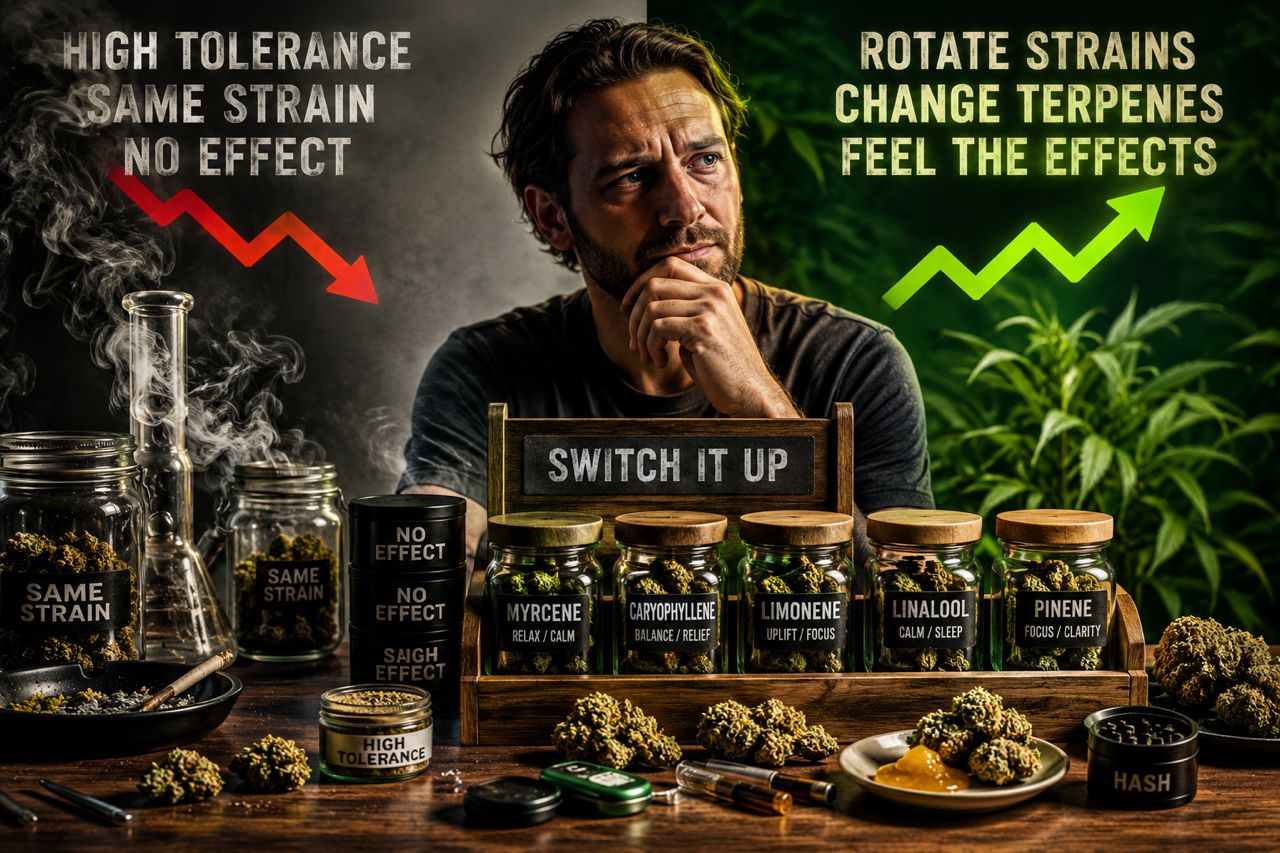
Somewhere out there, a cannabis smoker just looked at their favorite strain, sighed dramatically, and muttered, “You don’t hit like you used to.”
It’s not the strain’s fault, my friend. It’s yours.
Well… kind of.
If you’ve been using cannabis every day for medical reasons, you’ve probably heard the same advice a hundred times:
“Take a tolerance break.”
Sounds great in theory.
Not so great if cannabis is the medicine that helps you get through your day.
For many medical consumers, taking a month off simply isn’t realistic. Pain doesn’t magically disappear because someone on the internet told you to “just quit for a while.” Anxiety doesn’t punch a time clock. Insomnia doesn’t care that you’re trying to reset your endocannabinoid system.
So what do you do when quitting isn’t really an option?
You get smarter.
Stop Marrying One Strain
I see this all the time.
Someone finds a strain they absolutely love.
Then they buy an ounce.
Then another ounce.
Then another.
Before long they’re smoking the exact same flower every single day wondering why it doesn’t smack them around like it did the first week.
Imagine eating pizza for every meal for two months.
You’d still like pizza…
…but the excitement would be gone.
Cannabis can feel similar.
Your body becomes familiar with what you’re consistently feeding it.
That’s why I always recommend keeping several different strains in rotation whenever your budget allows.
Not because one strain is “better.”
Because variety matters.
Think Beyond THC
Here’s where a lot of people get fooled.
They chase bigger THC percentages.
Thirty-two…
Thirty-four…
Thirty-six…
Meanwhile they’re completely ignoring the terpene profile.
Terpenes are the aromatic compounds that help give each strain its unique smell, flavor, and character, and many consumers feel they influence the overall experience alongside cannabinoids.
If you’ve been smoking a limonene- and pinene-heavy strain every day for weeks, try switching to something with a noticeably different terpene profile for a while.
Maybe something richer in myrcene or caryophyllene.
The goal isn’t to declare one terpene “better” than another. It’s simply to change the overall profile you’re consuming instead of feeding your body the exact same combination day after day.
Personally, I’ve found that after spending a week or two enjoying different terpene combinations, going back to my old favorites often feels… well… exciting again.
Is that guaranteed?
No.
Does it work for everyone?
Probably not.
But it’s worked well enough for me that it’s become part of my routine.
Rotate Your Products Too
Here’s another trick.
Don’t let your consumption routine become as predictable as a sitcom rerun.
If you normally smoke flower…
Try concentrates.
Throw a little hash on top.
Enjoy an infused pre-roll.
Switch to solventless rosin.
Experiment with edibles for a while if they’re appropriate for you.
Maybe use a dry herb vaporizer instead of combustion.
Changing how you consume cannabis can make the experience feel different, even if you’re using similar cultivars.
Variety keeps things interesting.
Your taste buds appreciate it.
Your lungs probably appreciate the occasional break from combustion, too.
And let’s be honest…
Cannabis is a lot more fun when every session doesn’t feel like you’re watching the same episode over and over.
Give Your Favorite Strains a Vacation
Here’s the funny thing.
Your favorite strain doesn’t need a breakup.
It just needs a vacation.
Put it on the bench for a couple of weeks.
Let another strain take the starting position.
Then bring your champion back into the lineup later.
Sometimes absence really does make the heart grow fonder.
Don’t Chase Bigger Numbers—Chase Better Experiences
The cannabis community has become obsessed with THC percentages.
Higher.
Higher.
HIGHER.
Meanwhile, some of the most enjoyable cannabis I’ve ever smoked wasn’t even the highest THC flower in the jar.
Great aroma.
Interesting terpene profiles.
Excellent cure.
Fresh flower.
Those things matter.
Sometimes far more than another two or three percent THC.
When Nothing Else Works…
Let’s be real.
If you’ve rotated strains…
Changed terpene profiles…
Switched products…
Mixed up your routine…
…and absolutely nothing is making a difference…
Then yes.
A genuine tolerance break may still be your best option.
Even if it’s only for a short time.
Sometimes giving your body a reset is exactly what it needs.
There’s no shame in that.
In fact, proving to yourself that you can take a break—even if you choose not to most of the time—isn’t a bad exercise in discipline.
The Bottom Line
If cannabis is part of your daily medical routine, quitting for weeks or months may not always be practical.
Before assuming you’ve permanently “lost the magic,” try changing the variables.
Rotate your strains.
Explore different terpene profiles.
Switch up your consumption methods.
Experiment with concentrates, edibles, or hash.
Keep your endocannabinoid system guessing just enough that every session doesn’t become yesterday’s rerun.
Your favorite strain might not be broken.
It might just be tired of seeing you every single day.
Give it a little space.
You might be surprised how much you miss each other.
Stay lifted. Stay curious. And remember… cannabis isn’t just about getting higher—it’s about getting smarter.
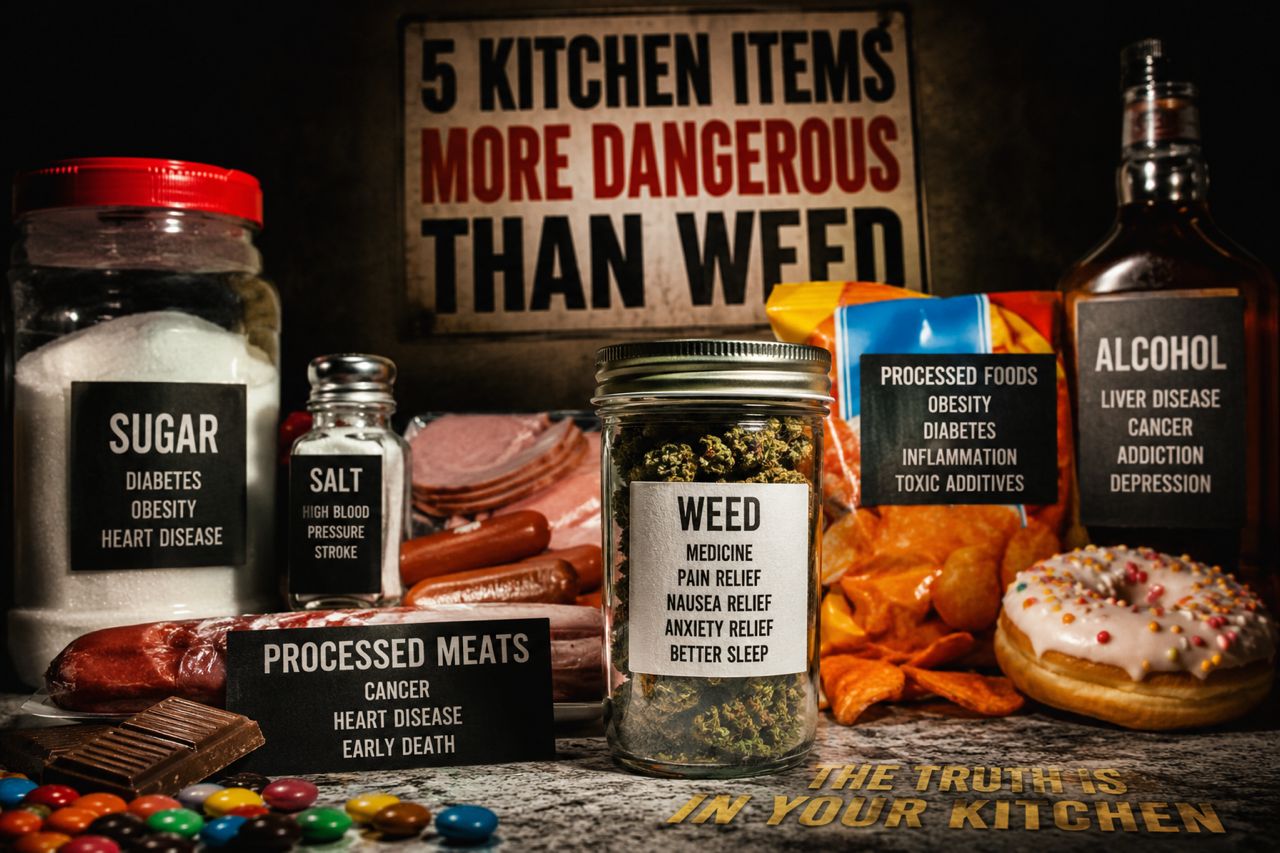
“Meanwhile… cannabis is still the one getting all the dirty looks.”
Picture this.
You’re standing in your kitchen. The police raid your house. They walk past the sugar, the salt, the processed meat, the vegetable oil, and the alcohol… then tackle you because they found an eighth of cannabis.
If aliens landed tomorrow, they’d probably assume weed was the biggest health threat in America.
The funny part?
Your pantry is quietly laughing.
Now before somebody starts typing an angry Facebook novel in the comments, let me be clear: cannabis isn’t harmless. It can impair driving, affect memory, increase heart rate, and heavy use—especially in younger people—can lead to dependence or other health problems. Responsible use matters.
But if we’re talking about what consistently causes disease, hospitalization, and death through everyday overconsumption…
Your kitchen has some repeat offenders.
Let’s meet the usual suspects.
⸻
- Sugar – The Sweet Little Villain
Sugar might be the greatest public relations success story of all time.
It wears birthday hats.
It hides in ketchup.
It’s somehow considered breakfast when it’s shaped like cereal.
Meanwhile, excessive added sugar intake has been linked to obesity, type 2 diabetes, fatty liver disease, heart disease, chronic inflammation, and tooth decay. It also spikes blood sugar, encourages overeating, and leaves your body asking, “Hey… remember vegetables?”
Cannabis, on the other hand, is actually being studied for potential medical uses including chronic pain, chemotherapy-related nausea, muscle spasticity from multiple sclerosis, appetite stimulation in certain medical conditions, and seizure disorders through specific cannabinoid medications. Those benefits don’t apply to everyone or every cannabis product, but they are real areas of medical research and treatment.
Sugar:
“Here’s diabetes.”
Cannabis:
“Here’s a bag of Doritos.”
Very different conversations.
⸻
- Salt – The Silent Blood Pressure Assassin
Salt isn’t evil.
Your body actually needs sodium.
The problem is Americans eat WAY more than they should.
Too much sodium raises blood pressure, increases the risk of heart disease and stroke, strains the kidneys, and can contribute to fluid retention. Many people don’t even realize how much they’re eating because it’s hiding in canned soups, frozen meals, sauces, chips, and restaurant food.
The irony?
People will clutch their pearls over someone smoking a joint…
…while eating a microwave dinner with enough sodium to preserve a mummy.
⸻
- Processed Meats – Bacon Isn’t Innocent
I know…
This one hurts.
Bacon is delicious.
Hot dogs have carried every Fourth of July since the invention of fireworks.
But processed meats like bacon, sausage, deli meat, and hot dogs have repeatedly been associated with increased risks of colorectal cancer, heart disease, and other chronic illnesses when eaten frequently.
I’m not saying never eat bacon.
I’m saying maybe stop acting like cannabis is the bigger health crisis while eating your third chili dog before noon.
Perspective matters.
⸻
- Ultra-Processed Snack Foods
Cookies.
Packaged snack cakes.
Sugary cereals.
Frozen junk food.
These products are often engineered to be incredibly tasty while packing huge amounts of added sugar, sodium, unhealthy fats, and refined carbohydrates.
Research consistently links diets high in ultra-processed foods with obesity, cardiovascular disease, metabolic disorders, and poorer overall health.
Your brain:
“I’m full.”
The snack cake:
“Respectfully… no you’re not.”
⸻
- Alcohol – The One Everyone Pretends Is the Responsible Adult
This one usually makes the room uncomfortable.
Alcohol is socially accepted almost everywhere.
Yet excessive alcohol use contributes to liver disease, several cancers, heart problems, accidents, addiction, and thousands of preventable deaths every year.
Meanwhile…
Somebody enjoys a legal cannabis edible on their couch…
…watches a nature documentary…
…and suddenly society acts like civilization is collapsing.
It’s amazing what good marketing can accomplish.
⸻
So… Is Weed Healthy?
That’s the wrong question.
The better question is:
Compared to what?
Compared to a balanced diet, exercise, good sleep, and healthy living?
Cannabis isn’t a replacement.
Compared to excessive sugar, heavy drinking, ultra-processed foods, processed meats, and chronic overeating?
That’s a completely different conversation.
Modern research recognizes legitimate medical uses for cannabinoids while also acknowledging that cannabis carries risks—including impaired judgment, potential dependence, mental health concerns for some individuals, and risks associated with smoking. Like almost everything in life, context and moderation matter.
⸻
The OG Strain Take
We’ve spent decades pointing fingers at a plant…
…while quietly eating ourselves into metabolic disease.
Maybe it’s time we stopped pretending the guy eating organic cannabis gummies is the health menace while Uncle Larry washes down four hot dogs with a six-pack and calls himself “old-fashioned.”
Don’t misunderstand me.
I’m not telling you to replace your vegetables with vape carts.
I’m saying if we’re going to have honest conversations about health…
Let’s stop giving the pantry a free pass while blaming the plant.
Because sometimes the most dangerous thing in your kitchen isn’t the jar labeled Cannabis…
It’s the stuff sitting right next to the toaster pretending to be normal.
And unlike weed…
Nobody has ever eaten one too many broccoli florets and accidentally ordered thirty-seven tacos at 2 a.m.
Stay lifted.
Stay informed.
And maybe… read the nutrition label once in a while.
Is Cannabis a Sin? The Answer Most People Aren’t Talking About
The joint sat on the table.
One Christian looked at it and saw medicine.
Another looked at it and saw sin.
Who’s right?
That question has divided churches, families, and believers for decades. Some Christians believe cannabis is no different than any other intoxicating substance and should be avoided completely. Others believe it is one of God’s natural medicines, placed on this earth to help people suffering from pain, anxiety, trauma, seizures, cancer, and countless other conditions.
So which side is correct?
The answer may surprise you.
The Bible never specifically mentions cannabis.
You can search from Genesis to Revelation and you won’t find a verse that says, “Thou shalt not smoke weed.” At the same time, you won’t find a verse that says, “Roll one up and pass it around.”
What the Bible does give us are principles.
And those principles reveal something many people completely miss.
The real question isn’t whether cannabis is a sin.
The real question is how and why you’re using it.
That’s where everything changes.
WHEN CANNABIS IS NOT A SIN
Imagine a man suffering from chronic pain.
Every morning he wakes up hurting.
His hips hurt.
His back hurts.
His body hurts.
Doctors hand him opioid painkillers. They work for a while, but eventually they become a trap. Tolerance increases. Dependence develops. Before long, he finds himself fighting a battle that millions of Americans know all too well.
Then he discovers cannabis.
The pain decreases.
The opioid cravings disappear.
He sleeps better.
His quality of life improves.
His family notices he’s more present.
His mood improves.
His relationship with God becomes stronger because he can finally focus on life instead of suffering.
Tell me honestly…
Where is the sin?
The Bible teaches that God created plants and herbs. Throughout Scripture we see examples of natural remedies being used for healing and restoration.
If cannabis is helping someone manage pain, avoid deadly drugs, reduce suffering, or improve their ability to function and live responsibly, many Christians would argue that this falls into the category of stewardship, not sin.
The intent matters.
The outcome matters.
The fruit matters.
If cannabis is helping someone stay alive, stay clean, stay productive, and stay close to God, it becomes very difficult to argue that the plant itself is the problem.
For many people, cannabis isn’t their temptation.
It’s their lifeline.
THE FENTANYL QUESTION
Let’s talk about the elephant in the room.
America is losing people every day to fentanyl.
Good people.
Parents.
Children.
Friends.
Neighbors.
Many people who now use cannabis medically aren’t choosing between cannabis and nothing.
They’re choosing between cannabis and relapse.
Cannabis and opioids.
Cannabis and fentanyl.
Cannabis and death.
That’s a very different conversation.
A recovering addict who uses cannabis to avoid returning to substances that could literally kill them is not in the same category as someone who is simply looking to get as intoxicated as possible.
Those are two entirely different situations.
One may be using cannabis as a tool for healing.
The other may be using it as a tool for escape.
God sees the difference.
WHEN CANNABIS CAN BECOME SIN
Now let’s talk about the other side.
Because yes, cannabis absolutely can become sinful.
Not because it’s cannabis.
Because of what a person does with it.
The Bible repeatedly warns believers about losing self-control, becoming enslaved to things, and allowing anything to become more important than God.
That’s where cannabis can become dangerous.
If you skip church because you’d rather stay home and get high…
If you neglect your family because you’re always chasing the next smoke session…
If you spend money needed for rent, food, or responsibilities on weed…
If you consistently choose cannabis over your relationship with God…
If your desire to get high becomes more important than your character, your responsibilities, or your faith…
Then you’ve crossed a line.
At that point, the cannabis isn’t the issue.
The idol is.
Let’s be clear: being involved in the cannabis industry, wearing cannabis clothing, reviewing products, educating patients, advocating for legalization, or being known as a cannabis professional does not automatically make cannabis an idol.
Many people dedicate their lives to helping others understand this plant and its potential benefits. That can be a career, an educational mission, an act of advocacy, or even a way of helping people find alternatives to more dangerous substances.
The real question is whether cannabis serves a purpose in your life, or whether it has taken control of your life.
Anything can become an idol.
Money.
Politics.
Fame.
Relationships.
Sports.
Even work itself.
Cannabis is no exception.
The moment something becomes more important than God, you’ve got a spiritual problem.
Not a plant problem.
A heart problem.
THE DIFFERENCE BETWEEN MEDICINE AND IDOLATRY
Here’s the easiest way to understand it.
Ask yourself one simple question:
“Is cannabis helping me serve God better, or is it pulling me away from Him?”
That’s the dividing line.
If cannabis helps manage pain, reduces suffering, keeps you off harder drugs, and allows you to become the best version of yourself, many believers would see it as a blessing.
If cannabis becomes the center of your universe, dominates your decisions, controls your behavior, and weakens your relationship with God, then you’ve turned it into something it was never meant to be.
One use leads toward healing.
The other leads toward bondage.
Same plant.
Different outcome.
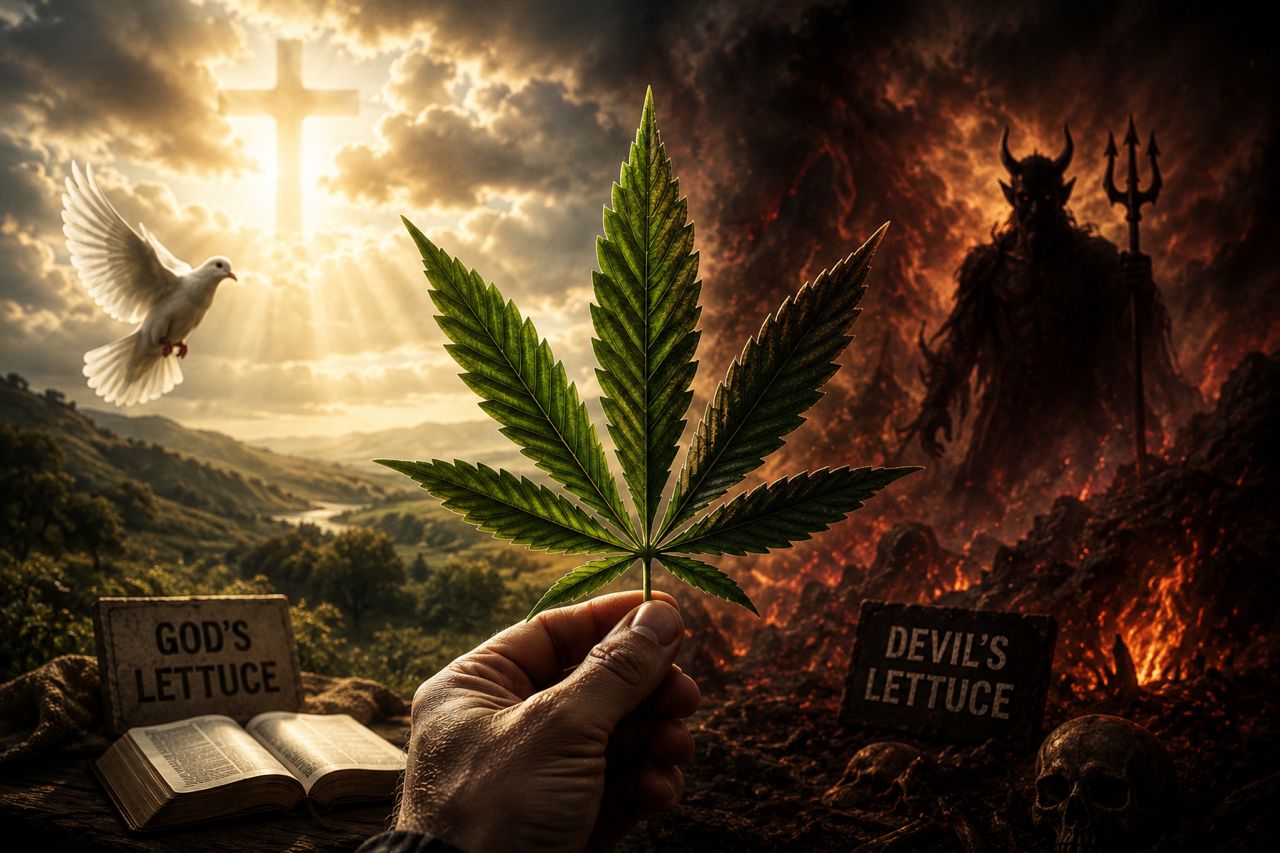
GOD’S LETTUCE OR THE DEVIL’S LETTUCE?
Maybe we’ve been asking the wrong question all along.
Maybe the question isn’t:
“Is cannabis a sin?”
Maybe the question is:
“What role does cannabis play in your life?”
Because in one person’s hands, cannabis can be a medicine that helps them avoid opioids, manage pain, and live a healthier life.
In another person’s hands, it can become an idol that consumes their thoughts, controls their actions, and separates them from God.
One person’s cannabis is God’s lettuce.
Another person’s cannabis is the Devil’s lettuce.
The difference isn’t found in the plant.
It’s found in the heart.
And that’s something worth praying about before your next session.
Because at the end of the day, God isn’t just looking at what’s in your hand.
He’s looking at what’s in your heart.

Facebook Suspended Me Again: How Much Power Are We Willing to Give One Platform?

YOUR CANNABIS BRAND ISN’T FAILING… IT’S JUST TOO DAMN QUIET! | Why the Next Big New York Cannabis Company Could Be Yours

Torch vs. E-Rig: Has the Dab Torch Finally Met Its Match? (Why OG Strain Is Finally Making the Switch)

She Didn’t Tiptoe In — OG Granny Blew the Door Off the Internet 💥🌿

Tokalotapot & Cannafae: The Couple That Made Weed Legal (Not Really, But It Feels Like It)

“Damn Sam”, The Man Who Kept the 518 Lit (and Safe) Before It Was Legal to Say “Lit”
-
 Cannabis Hall Of Fame6 months ago
She Didn’t Tiptoe In — OG Granny Blew the Door Off the Internet 💥🌿
-
 Cannabis Hall Of Fame10 months ago
Tokalotapot & Cannafae: The Couple That Made Weed Legal (Not Really, But It Feels Like It)
-
 Cannabis Hall Of Fame4 months ago
“Damn Sam”, The Man Who Kept the 518 Lit (and Safe) Before It Was Legal to Say “Lit”
-

 Cannabis Hall Of Fame11 months ago
Dope as Yola: From the Bottom to Cannabis Hall of Fame
-

 Community6 months ago
Empire State Cannabis Cup: An OG Strain Community Walkthrough
-

 Community9 months ago
From Soil, Struggle, and Soul: Hudson Valley Green Wins Big at the Palenville Cannabis Cup”
-

 Community10 months ago
🔥 HARVEST HYSTERIA: WHERE THE BUD AT, NEW YORK?!
-

 Humor11 months ago
OG Strain: The 518’s True Connoisseur Bringing Cannabis Reviews and Comedy Gold to YouTube