Industry
THE REAL DIFFERENCE BETWEEN A GOOD DISPENSARY & A BAD ONE


If you’re in the cannabis industry right now — grower, owner, budtender, brand, whatever — you already know the competition is getting fierce. And if you didn’t know… surprise! It’s about to feel like the Wild West with WiFi.
Let me paint you a picture.
A couple years ago in my hometown of Schenectady, New York, there was literally ONE dispensary. Uno. A single lonely weed shop sitting there like, “Hey guys… anyone?”
Fast-forward to today:
Now there’s one on every freakin’ block. If they open two more, I swear we’re gonna have to start stacking them vertically like weed Jenga.
And when the market blows up like that, you’re gonna see two types of dispensaries:
the good ones and the ones you pretend you didn’t see when you’re driving by.
So let’s break it down, OG Strain style.
GOOD DISPENSARIES ARE RUN BY CANNABIS PEOPLE
A good dispensary is built on passion — real, sticky-fingered, terp-chasing, strain-loving passion.
Owners who actually love the plant.
Budtenders who actually smoke the product.
Employees who actually know what the hell they’re talking about.
If the budtender can’t tell the difference between an indica and a labradoodle, we have a problem.
A dispensary should feel like you’re stepping into a place run by connoisseurs, not accountants.
Because yes, to all the big-money investors who jumped into the game when legalization hit:
You can’t own an art gallery if you don’t know a damn thing about art —
and you can’t run a dispensary if you don’t know a damn thing about cannabis.
Facts are facts.
THE DISPENSARIES TO AVOID (PLEASE RUN)
I’ve seen shops owned by people who never touched a joint in their life, but saw dollar signs when the laws changed. Weed to them is a “product,” not a culture.
And trust me… you can tell.
Dead stores.
Empty parking lots.
No lines.
No energy.
No customers.
You walk in and it’s so quiet you can hear the jars judging you.
Some people say, “Well hey, no line means I get in and out fast!”
Nah. There’s a reason there’s no line.
That’s like seeing an empty restaurant during dinner rush and saying, “Wow, private dining!” No bro — get out of there before you get food poisoning.
I’m not naming names… but if you live in Schenectady, you already know about that one certain place near the Greyhound bus station.
Hint hint. Yeah. THAT place.
I avoid it like the plague wearing Crocs.
THE ONES DOING IT RIGHT IN SCHENECTADY
Now let me give flowers where flowers are due.
In Schenectady, the spots doing it RIGHT are:
• Upstate Canna
• Cannabis City
• Electric City Cannabis Company
• The People’s Joint
These places care about their product, their customer base, and the experience.
They know cannabis isn’t just weed — it’s a lifestyle, a medicine, a craft, a community, and for some of us… a full-time personality trait.
BUDTENDERS: THE REAL MVPs
Listen — the budtender is the face of your dispensary. They’re the front line. The voice. The vibe. The ones your customers are actually dealing with.
And let me be real with you:
Finding a truly knowledgeable budtender is rare as hell.
That’s why the good ones?
They’re PRICELESS.
People like:
• Kev at The People’s Joint
• Sheena from Electric City Cannabis Company
These two know their stuff. Not from scripts. Not from brochures. Not from the packaging on a pre-roll.
They know because they actually use the product, study the strains, understand the terpenes, and speak from EXPERIENCE.
Dispensaries — let me tell you something important:
If your owner doesn’t smoke, that’s fine.
But if your employees don’t smoke…
If your budtenders can’t tell me what their favorite strain on the shelf is…
If nobody on your team can describe the feeling, the flavor, or the high…
You don’t deserve a dispensary.
Period.
Spend the extra money to hire the real ones.
The passionate ones.
The educated ones.
The ones who LOVE the plant.
Because your business is only as good as your team.
WANT TO STAY IN BUSINESS? BUILD THE BEST TEAM.
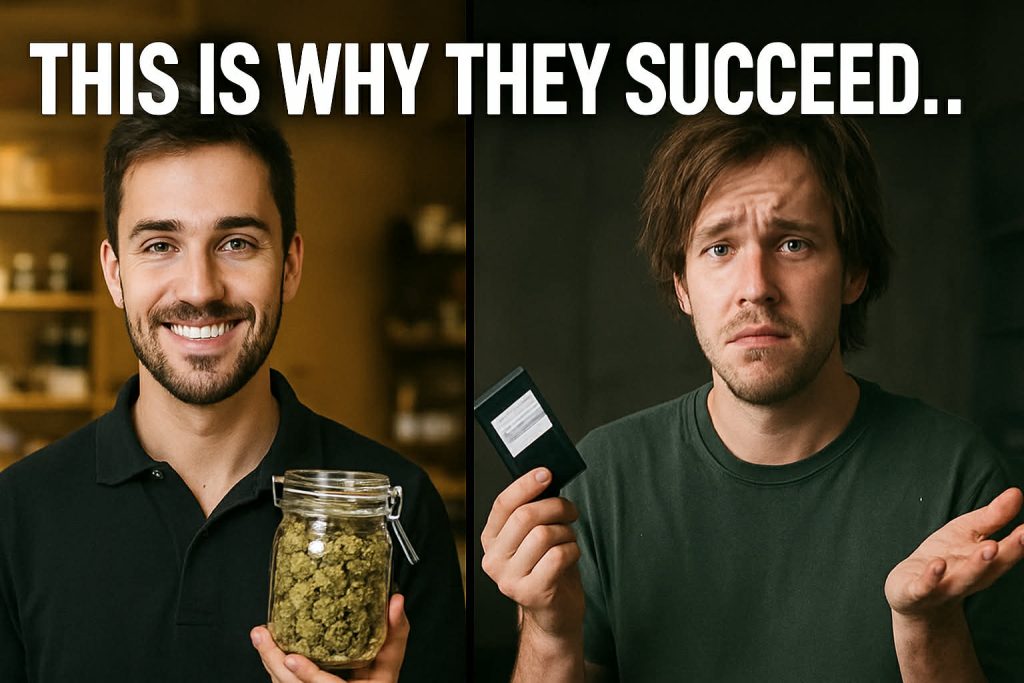
Competition is too crazy now. You can’t survive with mediocre flower, clueless staff, and vibes of a DMV waiting room.
You need:
✔ Passion
✔ Knowledge
✔ Community respect
✔ Fire products
✔ Fire prices
✔ A fire TEAM
And when you’re ready to get your business name out there — when you want people talking about you, finding you, and actually walking through your doors — work with:
🔥 The Plug’s Pages Magazine
🔥 Strain’s Strain Reviews (Talk Cannabis)
Because if you want the BEST promo, the realest audience, and customers who stay loyal for LIFE?
Hit up OG Strain today.
Let’s put your business exactly where it belongs —
in front of the people who buy, smoke, and support.
100 new customers by next week is light work.
But not just any customers…
Customers who KEEP coming back.
Let’s build your brand the way it should’ve been built from day one.
— OG Strain
Strain’s Strain Reviews (Talk Cannabis)
The Plug’s Pages Magazine




When a state turns a cannabis crackdown into a criminal-justice issue, silence isn’t an option.
There are moments in the cannabis movement when you read the news and think, “Wait…did we seriously just go backward?”
This is one of those moments.
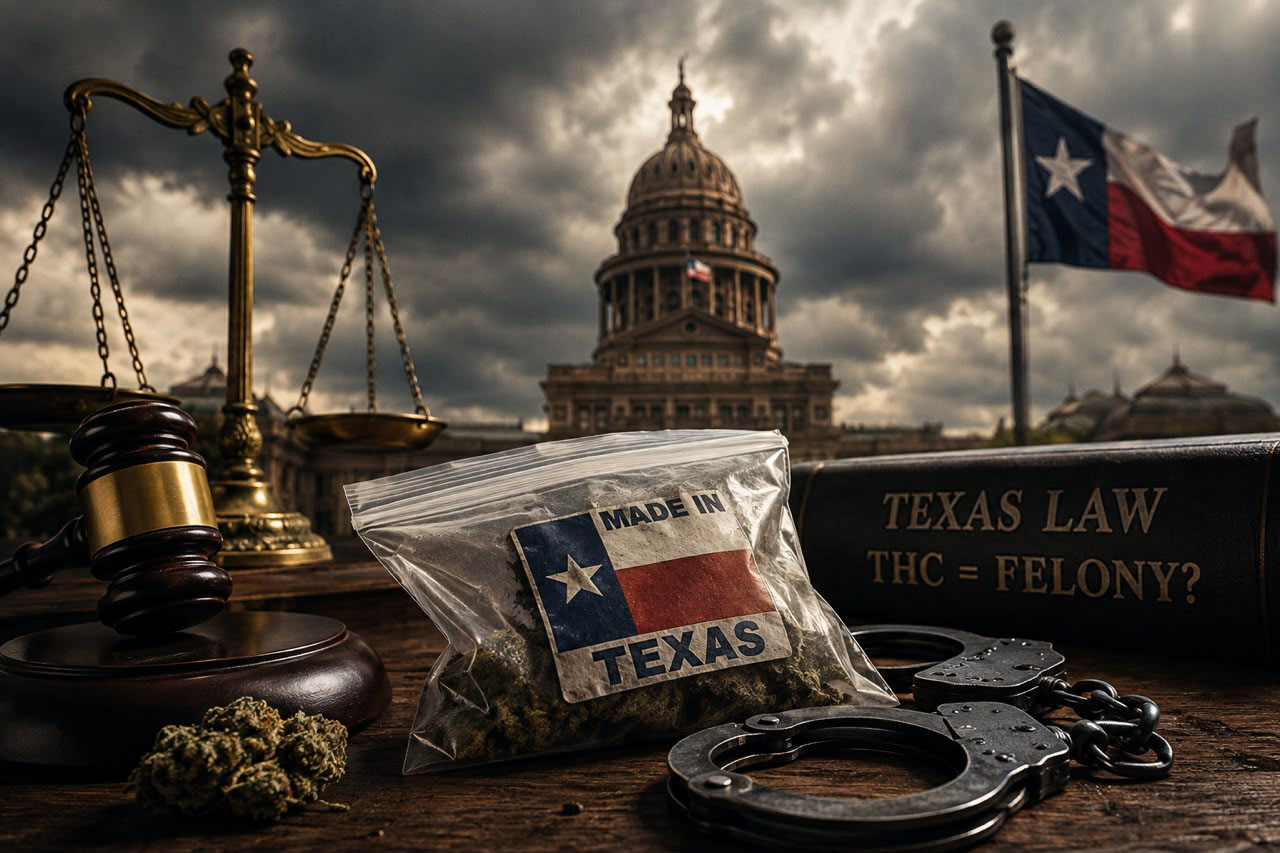
As of July 31, 2026, Texas began enforcing a sweeping crackdown on numerous hemp-derived THC compounds, including delta-8 and delta-10. Compounds that had been legally sold in Texas—including in products such as gummies and vapes—can now fall under Texas controlled-substance laws, with possession potentially carrying felony consequences depending on exactly what the substance is and how much is involved.
And before somebody starts throwing tomatoes at me for saying this: there is an important legal distinction here.
Texas did not suddenly rewrite its marijuana-possession statute to make one gram of ordinary marijuana a felony. Under the current statute, possession of two ounces or less of marijuana remains a Class B misdemeanor.
But don’t let that technical distinction distract from the bigger picture.
Texas has just taken a giant step backward on cannabis freedom.
And that’s what this article is about.
WE’VE BEEN HERE BEFORE
For decades, cannabis consumers were treated like criminals.
People lost jobs. People lost opportunities. People lost years of their lives. Families were torn apart. And people went to prison over a plant that millions of Americans now openly consume.
Then something started changing.
States began recognizing that prohibition wasn’t working.
Cannabis legalization and reform movements began spreading across the country. Medical programs appeared. Adult-use markets followed. Communities began expunging old convictions. And in some places, people who had been criminalized for participating in the cannabis industry were finally being given opportunities to participate in the legal industry.
That was more than a business transition.
It was an acknowledgment that we got something wrong.
America had spent decades telling people cannabis was so dangerous that possessing it could destroy their lives.
Then America slowly began admitting:
Maybe the people weren’t the problem.
Maybe the policy was.
Texas appears determined to take a different road.
THE GOVERNOR’S ROLE MATTERS
If we’re going to criticize government policy, we need to identify who actually has responsibility for it.
Governor Greg Abbott is central to the story.
In September 2025, Abbott issued Executive Order GA-56 directing Texas agencies to tighten regulation of hemp-derived products. The order called for changes involving age restrictions, testing, labeling, fees and enforcement.
Abbott had previously vetoed Senate Bill 3, a sweeping hemp prohibition passed by the Texas Legislature in 2025. In his veto statement, he argued that an outright prohibition could create serious constitutional and federal-law problems and called instead for a regulatory framework.
But Texas didn’t stop there.
In 2026, Texas restored controlled-substance treatment for several hemp-derived THC compounds. The result is a situation where products that were previously available in ordinary Texas retail stores can suddenly carry dramatically different legal consequences.
That is an enormous change.
And ordinary people need to understand it.
IMAGINE THIS
Imagine you’re visiting a friend in Texas.
You’ve got a legal-looking package of THC gummies sitting in your vehicle.
Maybe you bought them legally before the rules changed.
Maybe you didn’t even realize the law had changed.
Maybe you thought, “It’s hemp. It’s sold in stores. What’s the problem?”
Now imagine that same product is suddenly treated as a controlled substance.
That isn’t some abstract political debate.
That’s a real person’s freedom.
That’s someone’s criminal record.
That’s someone’s job.
That’s someone’s family.
And potentially, depending on the substance and circumstances, that’s someone’s liberty.
Ask yourself a simple question:
Does possessing a tiny amount of a cannabis-derived product automatically make somebody a bad person?
Of course it doesn’t.
Yet criminal law has a way of turning complicated human beings into very simple labels:
CONVICTED.
THIS IS BIGGER THAN WEED
That’s the part I really want people to understand.
This isn’t only about marijuana.
It’s about what happens when government decides that adults shouldn’t be trusted to make decisions about their own bodies.
You don’t have to smoke cannabis.
You don’t even have to like cannabis.
Hell, you can think cannabis smells like a skunk got trapped inside a gym bag.
That’s fine.
But you should still care about the principle.
Because once government gets comfortable deciding what adults are allowed to possess, consume or put into their own bodies, the argument becomes bigger than cannabis.
The cannabis movement has always been about more than getting high.
It has been about freedom, fairness, personal responsibility and ending disproportionate criminal punishment.
And that’s why this moment matters.
TEXAS, WE KNOW YOU SMOKE
Here’s the part that makes me laugh.
Texas has millions of people.
And somehow we’re supposed to believe cannabis consumers simply disappeared because somebody changed the rules?
Come on.
That’s like putting a “NO FISHING” sign next to a lake and expecting every fisherman in America to suddenly discover knitting.
People don’t stop consuming something simply because politicians decide they don’t like it.
Prohibition has taught us that lesson repeatedly.
The question is whether government chooses to regulate reality—or pretend reality doesn’t exist.
SO WHAT CAN WE ACTUALLY DO?
Here’s my answer:
Use your wallet.
If you disagree with what Texas is doing, you don’t have to sit around complaining about it while continuing to financially support everything coming out of the state.
You can make different choices.
If you see a product labeled “Made in Texas,” you have the right to decide whether you want to buy it.
If you don’t agree with Texas’ cannabis policies, consider supporting businesses and organizations in states that reflect the policies you believe in.
If you’re donating to organizations, research where that money goes.
If you’re buying products, research where they’re manufactured.
And if you disagree with Texas’ policies, say so.
Facebook.
Instagram.
TikTok.
YouTube.
Letters.
Emails.
Phone calls.
Public comments.
Every peaceful, lawful avenue available.
Don’t threaten anybody.
Don’t harass anybody.
Don’t destroy anything.
Just make your voice impossible to ignore.
Because democracy is not supposed to be quiet.
WRITE THE GOVERNOR
If you want to take your protest directly to the person whose administration initiated the regulatory crackdown, write Governor Greg Abbott.
The Governor’s official office specifically invites citizens to submit opinions and concerns.
Governor Greg Abbott
Office of the Governor
P.O. Box 12428
Austin, TX 78711-2428
You can also use the Governor’s official online opinion form through the Office of the Governor.
Tell him what you think.
Be respectful.
Be factual.
Be passionate.
And most importantly, be heard.
WE CANNOT AFFORD TO GO BACKWARD
I’ve spent years watching the cannabis movement fight for progress.
I’ve watched people who were once treated like criminals become legitimate business owners.
I’ve watched communities build cannabis industries.
I’ve watched states recognize that locking people up for possessing a plant was not exactly the greatest public-policy achievement in American history.
And I’ve watched people who were once punished for cannabis finally receive opportunities in the legal marketplace.
To me, that was America acknowledging something important:
We were wrong.
So when I see laws and policies moving in the opposite direction, it pisses me off.
Not because I think everybody should smoke weed.
Because I think adults should have freedom.
Texas can call this public safety.
Texas can call this regulation.
Texas can call this protecting children.
Those are legitimate issues worth discussing.
But when the solution creates the possibility that ordinary adults can suddenly face life-altering criminal consequences over products they previously could legally purchase, we have every right to ask whether the punishment fits the conduct.
THIS ISN’T THE END OF THE MOVEMENT
And here’s where I want to be clear:
I don’t believe the cannabis movement is going backward.
I believe Texas is choosing to go backward.
There’s a difference.
The national cannabis movement is bigger than one governor.
Bigger than one legislature.
Bigger than one state.
And certainly bigger than one political party.
Cannabis consumers exist everywhere.
Republicans smoke it.
Democrats smoke it.
Independents smoke it.
Rich people smoke it.
Poor people smoke it.
Blue-collar workers smoke it.
Professionals smoke it.
Veterans smoke it.
Artists smoke it.
Entrepreneurs smoke it.
And yes…
Texans smoke it.
That’s precisely why this fight isn’t over.
THE MESSAGE FROM OG STRAIN
I’m not calling for violence.
I’m not calling for harassment.
I’m not calling for anybody to break the law.
I’m calling for something far more powerful:
Participation.
Pay attention.
Know what your state is doing.
Know what politicians are doing.
Know what you’re buying.
Know where your money is going.
Write letters.
Make phone calls.
Speak publicly.
Vote.
Organize.
Support cannabis businesses that are fighting for sensible policy.
And when politicians forget that government is supposed to work for the people?
Remind them.
Because freedom doesn’t protect itself.
People protect it.
And if we learned anything from the last several decades of cannabis prohibition, it’s this:
Every time somebody tells us the fight is over, that’s usually when we need to start fighting harder.
Texas may have changed the rules.
But it hasn’t changed the people.
It hasn’t changed the millions of Americans who believe cannabis should be treated responsibly rather than criminalized.
And it certainly hasn’t changed me.
I’m OG Strain.
I’ve been in this movement.
I’ve watched it grow.
I’ve watched people sacrifice for it.
I’ve watched people fight for it.
And I’m not interested in watching us quietly surrender everything we’ve accomplished.
We cannot go backward.
Not for cannabis.
Not for freedom.
Not for the people who spent decades paying the price for prohibition.
And not for the next generation that deserves better than inheriting the same failed war our generation spent so long trying to end.
Texas, we’re watching.
America, we need to pay attention.
And cannabis community—don’t you dare fall asleep now.
Because this fight is bigger than weed.
It’s about freedom.
Industry
YOUR CANNABIS BRAND ISN’T FAILING… IT’S JUST TOO DAMN QUIET! | Why the Next Big New York Cannabis Company Could Be Yours
“The best flower in the world can’t sell itself if nobody knows it exists.”
Let me ask you something…
Do you own a cannabis business?
Do you believe in your products?
Do you know your flower, rosin, edibles, concentrates, or genetics can stand toe-to-toe with just about anybody else in New York?
Then here’s the million-dollar question…
Who’s making sure people know about you?
Because here’s the truth: you can grow the loudest flower in the state, but if your marketing is whispering, your business will stay quiet.
The cannabis industry is changing fast. New brands are popping up every day. New dispensaries are opening. New growers are entering the game. Customers have more choices than ever before.
That’s exciting…
But it’s also a problem.
Because if people don’t know your name, they can’t become your customers.
⸻
You Focus on Growing Great Cannabis. I’ll Focus on Growing Your Audience.
Your job is to bring quality to the table.
My job is making sure people know it’s sitting on the table.
That’s what I love doing.
I’m not some marketing company that got handed a cannabis account and had to Google what a terpene is.
I live this culture.
I’m at the events.
I’m talking with growers.
I’m interviewing hash makers.
I’m filming dispensaries.
I’m reviewing products.
I’m writing articles.
I’m networking with creators.
I’m building relationships every single week.
When I promote a company, it isn’t because someone handed me a script.
It’s because I actually know the people.
I’ve tried the products.
I’ve heard the story behind the brand.
That authenticity matters.
Cannabis consumers can spot fake promotion quicker than someone who says they “only take one little dab.”
We all know how that story ends.
⸻
More Than Promotion… It’s Partnership.
When I work with a company, I don’t disappear after posting one video.
I’m thinking about your brand constantly.
What article should we write next?
What video would customers enjoy?
What event should we cover?
Who should we collaborate with?
What story hasn’t been told yet?
That’s the difference.
This isn’t simply advertising.
It’s building a brand.
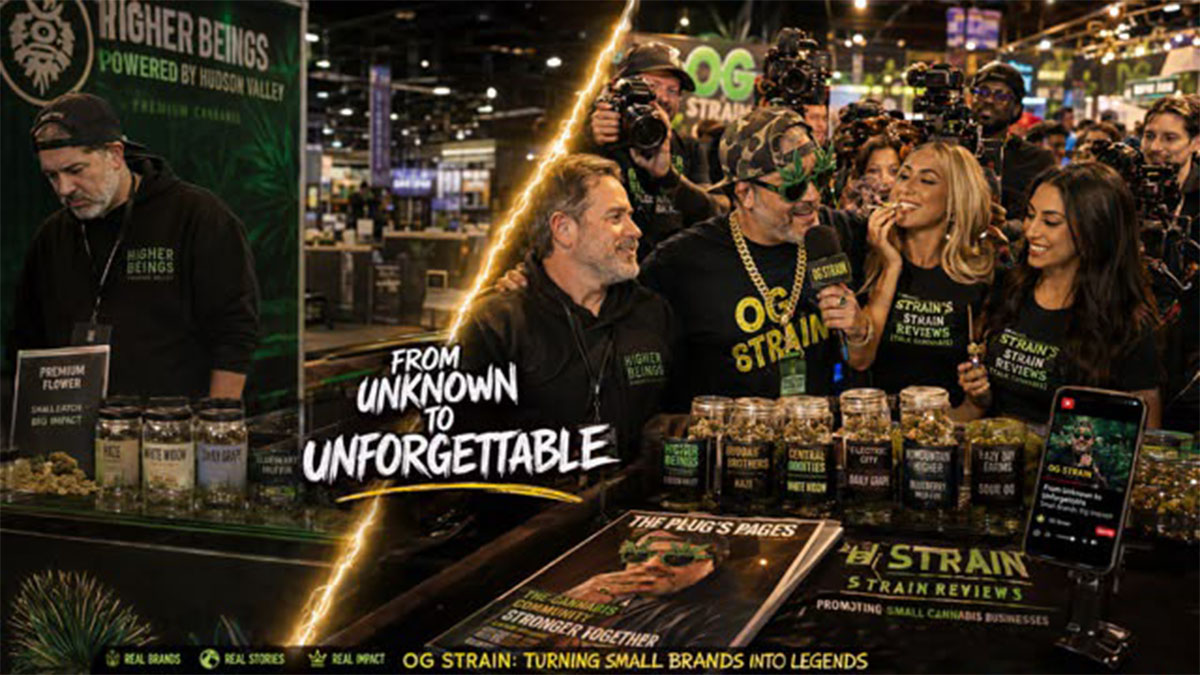
Through The Plug’s Pages Magazine, my YouTube channel Strain’s Strain Reviews (Talk Cannabis), social media, and the relationships I’ve built throughout New York’s cannabis community, I’ve been fortunate enough to help shine a spotlight on some incredible people and businesses.
Every interview opens another door.
Every article starts another conversation.
Every event introduces another audience.
Every collaboration builds another relationship.
That’s how communities grow.
⸻
Watching Good Companies Get the Recognition They Deserve
One of my favorite parts of doing this is watching hardworking people finally get noticed.
I’ve watched businesses gain more visibility after being featured through articles, videos, and ongoing promotion.
I’ve watched customers discover companies they had never heard of before.
I’ve watched craft growers sell through fresh harvests faster because people finally knew what they had available.
Does every bit of that success happen because of me?
Of course not.
Great companies earn loyal customers by creating great products.
But I absolutely believe consistent exposure helps great companies get discovered much faster.
Sometimes all a company needs is somebody willing to tell their story.
⸻
A Humbling Compliment I’ll Never Forget
Recently, Seymour Buds wrote an article describing me as one of the faces of New York’s cannabis community and even compared my passion for the industry to Dope As Yola’s influence in California.
Honestly…
That meant a lot.
Dope As Yola has built something incredible.
I don’t put myself on that level.
Not yet.
But I do understand passion.
I understand commitment.
I understand showing up.
When I say I’m going to support this industry…
I mean it.
Helping New York cannabis grow isn’t just something I do.
It’s something I genuinely love.
⸻
This Isn’t About Getting Rich
If making money was the only goal…
I’d probably choose a career where I didn’t spend half my weekends chasing cannabis events with a camera in one hand and wondering where I left my lighter with the other.
This is bigger than that.
I enjoy helping good companies succeed.
I enjoy seeing people get recognized for the hard work they’ve poured into their businesses.
Do I have bills to pay?
Absolutely.
That’s reality.
I can’t spend every waking hour promoting companies completely free forever.
But I also don’t believe cannabis businesses should have to spend outrageous amounts of money just to get quality promotion.
Some marketing agencies charge thousands of dollars every month.
What I’m trying to build is different.
Real relationships.
Real storytelling.
Real community.
⸻
A Promotional Package That Actually Makes Sense
Whether you’re a small grower…
A processor…
A dispensary…
An edible company…
A solventless hash producer…
Or a brand that’s getting ready to become New York’s next household name…
There’s room to work together.
Maybe your company needs magazine coverage.
Maybe you need YouTube videos.
Maybe you need interviews.
Maybe you need social media content.
Maybe you want all of it.
The goal isn’t selling you the biggest package.
The goal is building the right one.
One that fits your business.
One that fits your budget.
One that helps people remember your name.
⸻
Don’t Wait Until You Think You’re Ready
One mistake I see all the time is companies waiting until someday to begin promoting themselves.
“Someday” is expensive.
Start building your brand today.
Even if you’re not ready to purchase a promotional package, let’s have a conversation.
Let’s talk about your goals.
Let’s talk about your vision.
Let’s figure out what makes your company different.
That conversation costs absolutely nothing.
And it could be the first step toward building something much bigger.
⸻
Final Hit
New York’s cannabis industry is still in its early chapters.
The brands people talk about five years from now are being built today.
Not just by growing incredible cannabis…
But by building relationships.
By staying visible.
By telling their story.
If you’re serious about your business…
If you’re proud of what you’ve created…
If you’re ready for more people to know who you are…
My inbox is open.
Let’s talk.
Let’s build something together.
Because the next cannabis company everyone is talking about…
…could very well be yours.
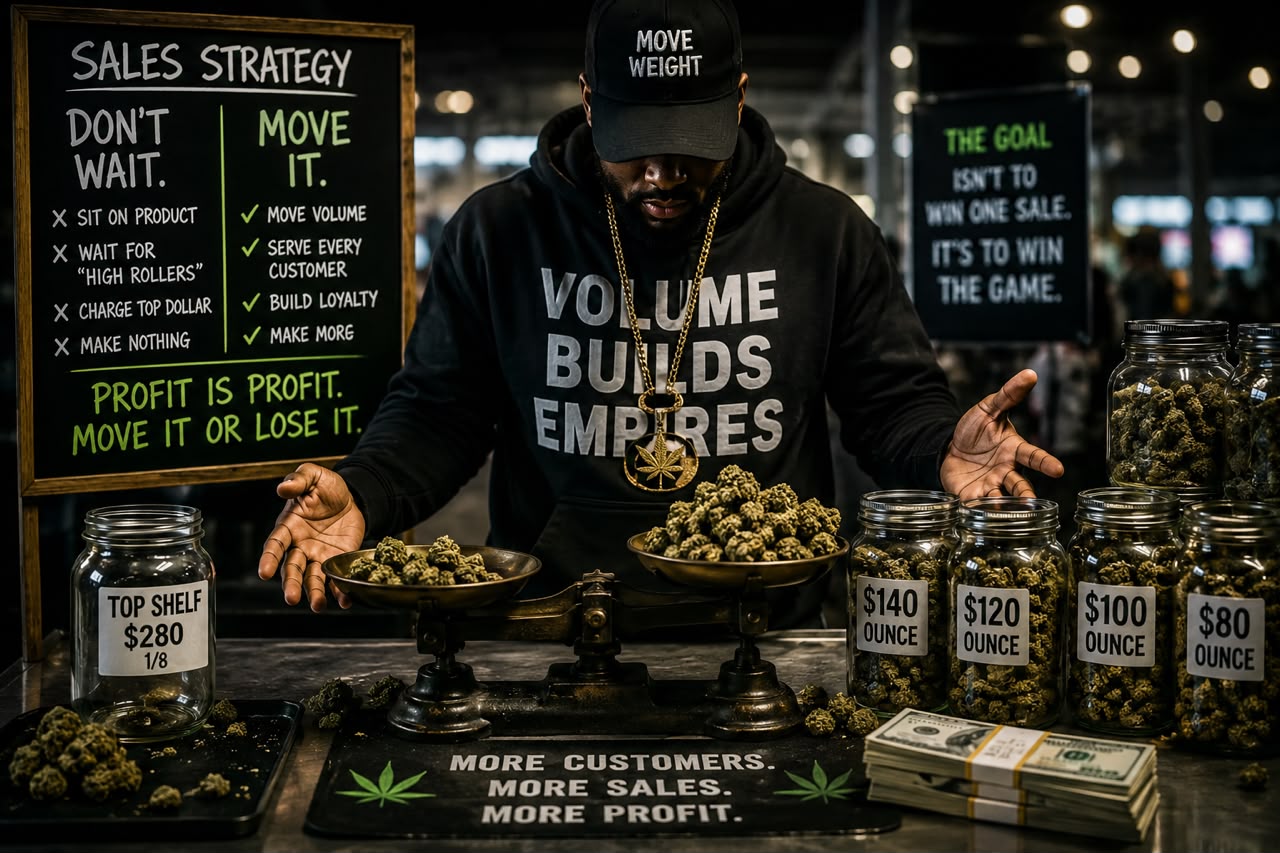
I’ve sold a lot of things in my life.
Windows.
Mortgages.
Cannabis.
I’ve sat through enough sales meetings, seminars, lectures, and motivational speeches to make a grown man start hearing the word “commission” in his sleep.
One thing I’ve learned is that sales is sales.
The product changes.
Human nature doesn’t.
And there’s one strategy I keep seeing in the cannabis industry that absolutely blows my mind.
The “I’m gonna sit on this forever and wait for a rich guy” strategy.
You know exactly what I’m talking about.
A vendor gets a decent batch. Maybe it’s even a great batch. They put a premium price on it and then spend the next three months staring at it like it’s the last jar of weed left on Earth.
Meanwhile, customers walk by.
Potential sales walk by.
Money walks by.
And the vendor proudly says:
“Nah, I’m waiting for the right customer.”
The right customer?
My brother in cannabis, the right customer just bought an ounce from the table next to you.
The $140 Ounce Problem
Let’s paint a picture.
You’re at an event.
The vendor beside you has ounces for $140.
Your flower is slightly better.
Not twice as good.
Not three times as good.
Slightly better.
But you’re charging double.
Now put yourself in the customer’s shoes.
Most people aren’t shopping for the absolute best flower in the building.
They’re shopping for the best value.
There’s a difference.
Now don’t get me wrong—there are absolutely people like me, OG Strain, who hunt for rare diamonds in the rough and happily pay extra for truly exceptional cannabis. Some consumers chase the best of the best no matter what the price tag says. But those customers are the exception, not the rule.
If they can get something that’s 90% as good for half the price, many of them will happily make that trade all day long.
And honestly?
Can you blame them?
The average consumer isn’t conducting a cannabis wine tasting with a monocle and a clipboard.
They’re trying to stretch their budget.
Profit Is Profit
Here’s where my sales background kicks in.
A lot of vendors focus on maximum profit per sale.
The smart ones focus on maximum profit overall.
Those are two very different things.
Let’s say you make $400 profit from one customer.
Great.
But what if you could have made $150 from four different customers during the same time period?
Now you’re at $600.
And you’ve moved product.
And you’ve built relationships.
And you’ve created repeat customers.
And you’ve generated referrals.
And you’ve freed up capital to buy more inventory.
The goal isn’t to win one transaction.
The goal is to win the game.
Cannabis Isn’t Fine Art
Some vendors treat cannabis like they’re auctioning off a rare painting.
They’re guarding jars like they’re museum exhibits.
Nobody touch it.
Nobody look at it.
Nobody breathe near it.
It’s special.
Meanwhile, the market keeps moving.
Here’s the reality.
Most flower is replaceable.
More is being grown every day.
More is being harvested every day.
More is being packaged every day.
Unless you’re sitting on something truly rare that won’t be available again for six months or longer, why are you acting like it’s the last cut on Earth?
Move it.
Replace it.
Move the next batch.
Replace that too.
Cannabis should move.
That’s what makes businesses grow.
The Rare Strain Exception
Now before somebody starts typing an angry comment, let’s be fair.
There are exceptions.
If you’ve got something genuinely rare.
A cut that’s difficult to find.
A limited release.
Something that won’t be available again anytime soon.
Then yes.
Holding your price can make sense.
Scarcity creates value.
But let’s be honest with ourselves.
Most of the flower people are sitting on isn’t rare.
It’s available.
It’s replaceable.
And if you can call your source tomorrow and get more, then you’re not protecting a treasure.
You’re delaying a sale.
Every Customer Isn’t the Same Customer
Another mistake I see is vendors treating pricing like it’s carved into stone tablets.
The cannabis market has never worked that way.
Every customer is different.
Some customers buy once.
Some buy weekly.
Some buy volume.
Some buy samples.
Some are loyal.
Some are shopping around.
Some vendors.
Some consumers.
Different relationships create different opportunities.
The smartest salespeople understand that flexibility closes deals.
The goal isn’t squeezing every dollar out of every person.
The goal is creating enough value that everyone wants to come back.
Because repeat customers are where the real money lives.
The Jar Doesn’t Get Better Sitting There
One of my favorite questions to ask is this:
How much money is that product making while it’s sitting on your shelf?
The answer is zero.
None.
Not a penny.
In fact, it’s costing you opportunity.
The longer inventory sits, the longer your money is trapped inside it.
That’s money that could have been reinvested into the next pickup.
The next strain.
The next opportunity.
The next customer.
A jar sitting on a shelf is basically a couch potato.
It isn’t working.
It’s just sitting there getting older.
The Biggest Players Understand This
Look around the industry.
The vendors moving serious volume aren’t usually the ones obsessed with squeezing every possible dollar from every sale.
They’re moving product.
Building relationships.
Creating repeat business.
Keeping inventory flowing.
Keeping customers happy.
Keeping money moving.
Momentum matters.
Volume matters.
Reputation matters.
A customer who feels they got a good deal often becomes a customer for years.
A customer who feels they’re getting squeezed usually becomes somebody else’s customer.
Final Hit
I’ve spent years in sales.
I’ve watched top performers in multiple industries.
And one lesson keeps showing up over and over again.
You can’t deposit inventory into your bank account.
You can only deposit sales.
If a product is replaceable, move it.
If a profit is available, take it.
If a customer wants to buy, sell to them.
Because the cannabis industry isn’t a museum.
It’s a business.
And the vendors who understand that usually aren’t sitting around waiting for the perfect customer.
They’re too busy counting the money from all the customers they already sold to.


COLD CURE IS COMING: WHY ROSIN COULD BE NEW YORK’S NEXT BIG CANNABIS OPPORTUNITY

HOW I PRESERVE CLONES THROUGH CONTROLLED DORMANCY

THE GREAT CLEANOUT: Why I’m Done Collecting Followers and Starting to Collect REAL ONES

She Didn’t Tiptoe In — OG Granny Blew the Door Off the Internet 💥🌿

Tokalotapot & Cannafae: The Couple That Made Weed Legal (Not Really, But It Feels Like It)

“Damn Sam”, The Man Who Kept the 518 Lit (and Safe) Before It Was Legal to Say “Lit”
-
 Cannabis Hall Of Fame8 months ago
She Didn’t Tiptoe In — OG Granny Blew the Door Off the Internet 💥🌿
-
 Cannabis Hall Of Fame11 months ago
Tokalotapot & Cannafae: The Couple That Made Weed Legal (Not Really, But It Feels Like It)
-
 Cannabis Hall Of Fame6 months ago
“Damn Sam”, The Man Who Kept the 518 Lit (and Safe) Before It Was Legal to Say “Lit”
-

 Cannabis Hall Of Fame1 year ago
Dope as Yola: From the Bottom to Cannabis Hall of Fame
-

 Community7 months ago
Empire State Cannabis Cup: An OG Strain Community Walkthrough
-

 Community11 months ago
🔥 HARVEST HYSTERIA: WHERE THE BUD AT, NEW YORK?!
-

 Community10 months ago
From Soil, Struggle, and Soul: Hudson Valley Green Wins Big at the Palenville Cannabis Cup”
-

 Humor12 months ago
OG Strain: The 518’s True Connoisseur Bringing Cannabis Reviews and Comedy Gold to YouTube