Community
When Grandma Stopped Freaking Out: How Cannabis Went Mainstream (and Why Big Alcohol Is Mad About It)

By OG Strain
⸻
There was a time — not that long ago — when admitting you used cannabis in polite company got the same reaction as announcing you kept a pet rattlesnake in your living room.
People would lean back slowly.
Eyes would widen.
Someone would whisper, “You mean… marijuana?” like they were saying the word demon.
But something interesting has happened over the past decade.
Cannabis didn’t just become legal in more places.
It became… normal.
And that might be the most shocking development of all.
⸻
The People You Never Expected
If you grew up in the 70s or 80s like many of us did, cannabis users were painted in a very specific light.

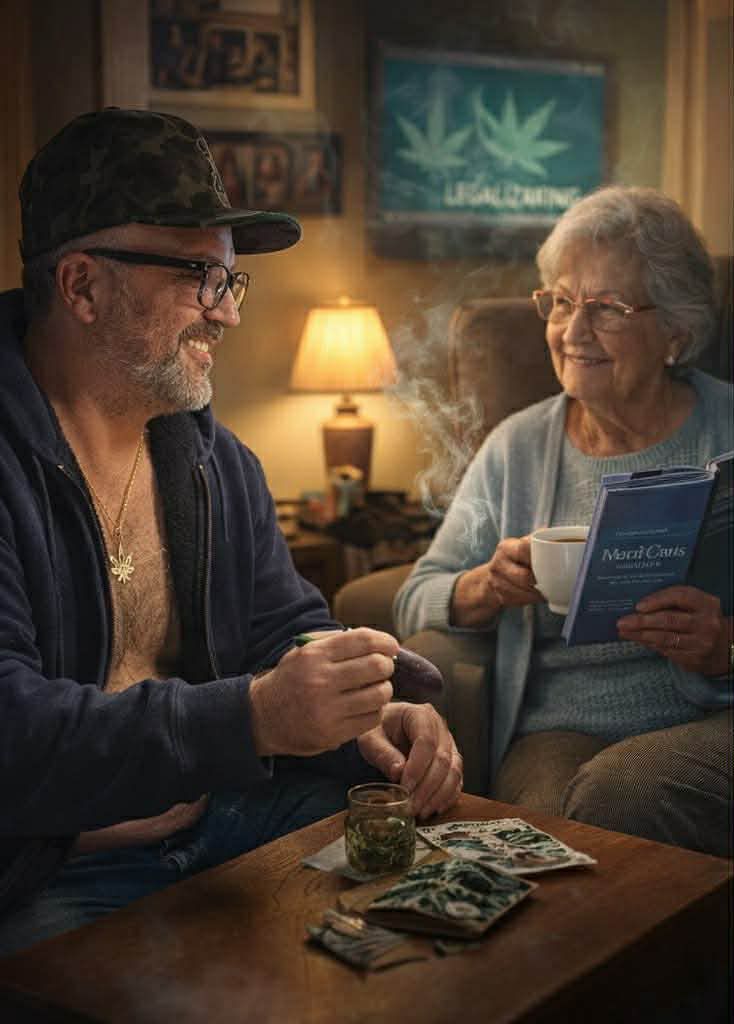
Lazy.
Unmotivated.
Living in a van.
Probably listening to Pink Floyd backwards trying to summon aliens.
But fast forward to today and look around.
Doctors are discussing cannabis with patients.
Rehab counselors are acknowledging its therapeutic potential.
Parents and even grandparents — the same ones who once believed a joint would turn you into a couch-bound criminal mastermind — are suddenly saying things like:
“Well… if it helps your back pain.”
They may not be lighting up themselves.
But they’re no longer acting like cannabis is chemically identical to crack cocaine.
Which, if you grew up during the “Just Say No” era, is honestly a pretty wild plot twist.
What changed?
Two things:
Reality.
And honesty.
⸻
Turns Out Cannabis Users… Function
Here’s the secret that decades of propaganda tried very hard to hide:
Most cannabis users are just… regular people.
They wake up.
Go to work.
Pay bills.
Raise families.
Handle responsibilities.
Some people even use cannabis to help them do those things.
For some, it helps with pain.
For others, anxiety.
For many, it simply helps them relax without wrecking their next morning.
And the more society has seen everyday cannabis users functioning normally, the more that old propaganda narrative has started to fall apart.
When someone spends years believing cannabis turns people into useless zombies…
…and then realizes their coworker, neighbor, and cousin all use it responsibly…
The math starts looking a little suspicious.
⸻
Enter the Last Major Opponent: Big Alcohol
At this point, most of the cultural resistance to cannabis has faded.
But there is one group that still seems extremely concerned about it.
And that group is the alcohol industry.
Now, let’s be honest for a second.
If you owned a billion-dollar industry and suddenly millions of people started replacing their evening drinks with edibles or a joint…
You’d probably be a little nervous too.
People are putting down the liquor bottles and saying things like:
“You know what? I think I’ll just take a gummy and watch a movie.”
And that trend has certain executives staring at profit charts the way a cat watches a laser pointer disappear.
⸻
The New Wave of Scare Tactics
Recently, media stories have started popping up highlighting every possible negative angle about cannabis.
Dramatic headlines.
Sensationalized statistics.
Terrifying buzzwords.
One of the latest media darlings?
A term called Cannabinoid Hyperemesis Syndrome, often sensationalized online as “scromiting.”
Yes.
“Screaming and vomiting.”
Which sounds horrifying until you remember something very important.
Alcohol has been making people throw up since approximately the invention of alcohol.
Yet nobody in history has coined a dramatic viral term like “alco-vomiting apocalypse syndrome.”
In fact, if we’re comparing the two honestly…
You are dramatically more likely to throw up after drinking a bottle of tequila than after eating a cannabis edible.
And everyone knows it.
Every college campus in America has at least one legendary story that begins with the sentence:
“Bro… I should not have had that last drink.”
⸻
The Gateway Argument That Never Made Sense
For decades, cannabis was also labeled the infamous “gateway drug.”
But that claim raises a simple question.
What substance do most people actually try first?
Spoiler alert:
It’s not cannabis.
It’s alcohol.
Yet when people talk about substance use, they say “drugs and alcohol.”
Notice the separation?
It’s like alcohol got grandfathered into respectability.
Meanwhile cannabis was treated like the rebellious cousin who shows up at family gatherings wearing tie-dye and telling the truth.
If we’re being logically consistent, alcohol would fit the “gateway” description far more often.
But culture doesn’t always follow logic.
Sometimes it follows marketing.
⸻
The Propaganda Era Is Ending
The biggest difference today compared to twenty or thirty years ago is simple.
People can see reality for themselves.
They know someone who uses cannabis responsibly.
They’ve seen patients benefit from it.
They’ve watched hardworking, productive adults incorporate it into normal life.
That firsthand experience is far more powerful than any old propaganda film.
And once people see the truth with their own eyes, fear loses its grip.
⸻
The Real Conversation
At this stage, the cannabis debate has shifted.
It’s no longer about whether the plant is pure evil.
Most people have already realized it’s… a plant.
The remaining friction mostly comes from economics.
Industries compete.
Markets shift.
Consumers make new choices.
And sometimes those choices make older industries uncomfortable.
That’s not a moral crisis.
That’s capitalism.
⸻
A Cultural Turning Point
The most fascinating part of cannabis going mainstream isn’t legalization.
It’s the change in perception.
Parents are reconsidering old assumptions.
Medical professionals are exploring therapeutic uses.
Even people who don’t use cannabis themselves are becoming more supportive of those who do.
When that many perspectives shift at once, it’s a sign of something larger than a trend.
It’s a cultural correction.
And like most corrections, it happened slowly — one conversation, one patient, one honest user at a time.
⸻
Final Thoughts
If you ask most everyday cannabis users about their experience, you’ll hear a wide range of answers.
But overwhelmingly, many describe positive impacts:
Relaxation.
Pain relief.
Better sleep.
A healthier alternative to other substances.
That doesn’t mean cannabis is perfect or risk-free.
No substance is.
But the days of pretending it’s some civilization-destroying menace are fading fast.
At this point, the biggest remaining opposition often sounds less like concern…
…and more like competition.
And when an entire culture starts laughing at old propaganda instead of fearing it, you know the conversation has finally changed.
- OG Strain