Products
FRESH PRESS VS. COLD CURE: WHICH ONE DESERVES A SPOT IN YOUR JAR?

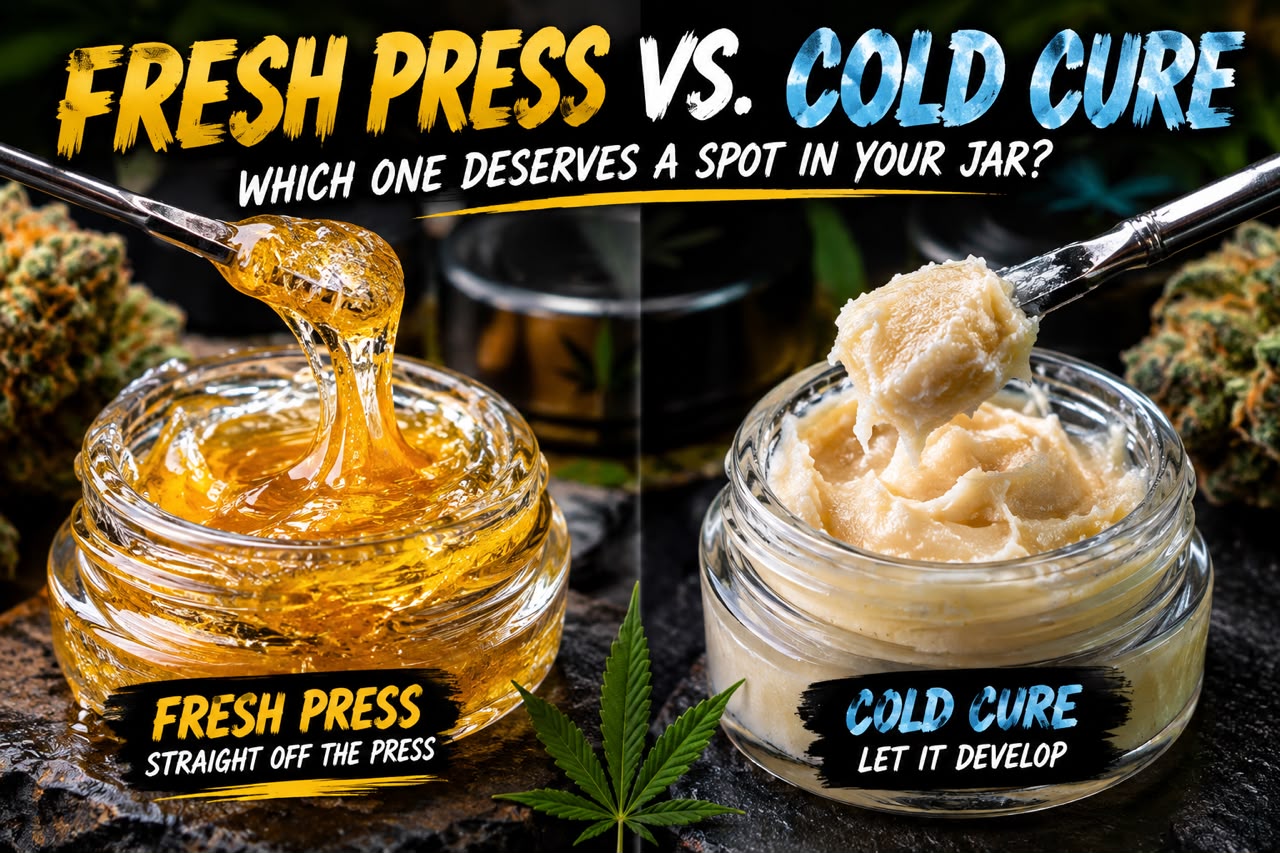
Two types of rosin. One press. Two completely different experiences.
If you’ve ever opened a jar of rosin and thought, “What the hell is this beautiful, sticky mess?” you may have just met fresh press.
And if you’ve opened another jar and found something creamy, scoopable and almost frosting-like, you’re probably looking at cold cure.
So what’s the difference?
Believe it or not, they can start as the exact same rosin.
The difference is what happens after it comes off the press.
FRESH PRESS: STRAIGHT OFF THE PRESS
Fresh press is essentially rosin in its freshly pressed state. Once the rosin is extracted through the press, it’s collected and packaged without intentionally putting it through a curing process.
The result can be glossy, translucent, sticky, oily or almost glass-like depending on the material and processing.
And while it can look absolutely beautiful, fresh press can be a pain in the ass to handle.
Bernie from Buddah Brothers, a CrisXotics vendor, put it perfectly:
“I hate fresh press. It’s a pain in the ass to work and most people end up losing half of it on their dab tool”
As OG Strain, I can’t argue with the man’s experience.
Sometimes fresh press doesn’t go onto your dab tool.
It goes wherever the fuck it wants.
But fresh press has its advantages. Because it hasn’t gone through a curing process, some people prefer the immediate, bright flavor and aroma of the freshly pressed product.
For the concentrate enthusiast who wants to experience rosin as close to its freshly pressed state as possible, that’s a major attraction.
COLD CURE: GIVE THAT ROSIN SOME TIME
Cold cure starts with the same basic rosin, but instead of immediately selling it as fresh press, the producer allows it to cure under controlled conditions.
During that time, the rosin’s physical structure changes.
The glossy, sticky material can develop into the creamy, badder-like consistency most people associate with cold cure.
And that’s where cold cure really separates itself.
It’s easier to work with.
You can usually scoop it, portion it and load your dab without needing a degree in concentrate engineering.
The texture can also make it easier to consistently control your dab size, which is something a lot of consumers appreciate.
FLAVOR: TWO DIFFERENT EXPERIENCES
This isn’t as simple as saying one tastes better.
Fresh press can provide a very immediate expression of the rosin, while curing can change how the aroma, flavor and texture are perceived.
Some people love that fresh, bright character.
Others prefer the fuller, more developed experience they associate with cured rosin.
That’s personal preference—and that’s where this debate gets interesting.
STORAGE: THIS IS WHERE THE TRADE-OFFS BEGIN
Fresh press generally needs careful storage to maintain its original state. Heat can quickly change its texture, so keeping it sealed, cool and protected from light is important.
Cold cure has already gone through a controlled transformation, but that doesn’t mean you can throw it on the dashboard of your car and expect it to be happy.
Depending on the producer’s process, cold-cure rosin may be stored under refrigerated or controlled cool conditions to help preserve its desired texture and terpene profile.
So while cold cure may be easier to use, maintaining it properly can require more attention.
Basically:
Fresh press can be harder to handle.
Cold cure can require more maintenance.
Pick your battle.
SO WHICH ONE IS BETTER?
Here’s the answer nobody wants to hear:
Neither one is automatically better.
Fresh press has legitimate advantages. It gives consumers the opportunity to experience rosin in its freshly pressed form, and some people specifically prefer its texture, aroma and flavor.
Cold cure has advantages too. It’s generally easier to handle, easier to portion, and its creamy consistency makes it much more user-friendly.
Personally?
OG Strain is taking the cold cure.
Not because fresh press is bad.
I’ve had fresh press that was absolutely fire.
I just prefer the combination of texture, flavor, workability and overall experience that a properly made cold cure gives me.
There’s something satisfying about opening a jar and seeing that beautiful creamy rosin sitting there waiting for you instead of watching half your dab stretch across the jar like a piece of mozzarella cheese.
THE BOTTOM LINE
Fresh press and cold cure aren’t enemies.
They’re two different ways of experiencing solventless rosin.
Fresh press is the “straight off the press” experience.
Cold cure is the “let’s give this thing some time to develop” experience.
And ultimately, the quality of the starting material and the skill of the producer matter more than whichever label is printed on the jar.
So try both.
See what your palate prefers.
See what your dab tool prefers.
And if your dab tool starts losing half the gram to the side of the jar…
Maybe Bernie was onto something.
- OG Strain









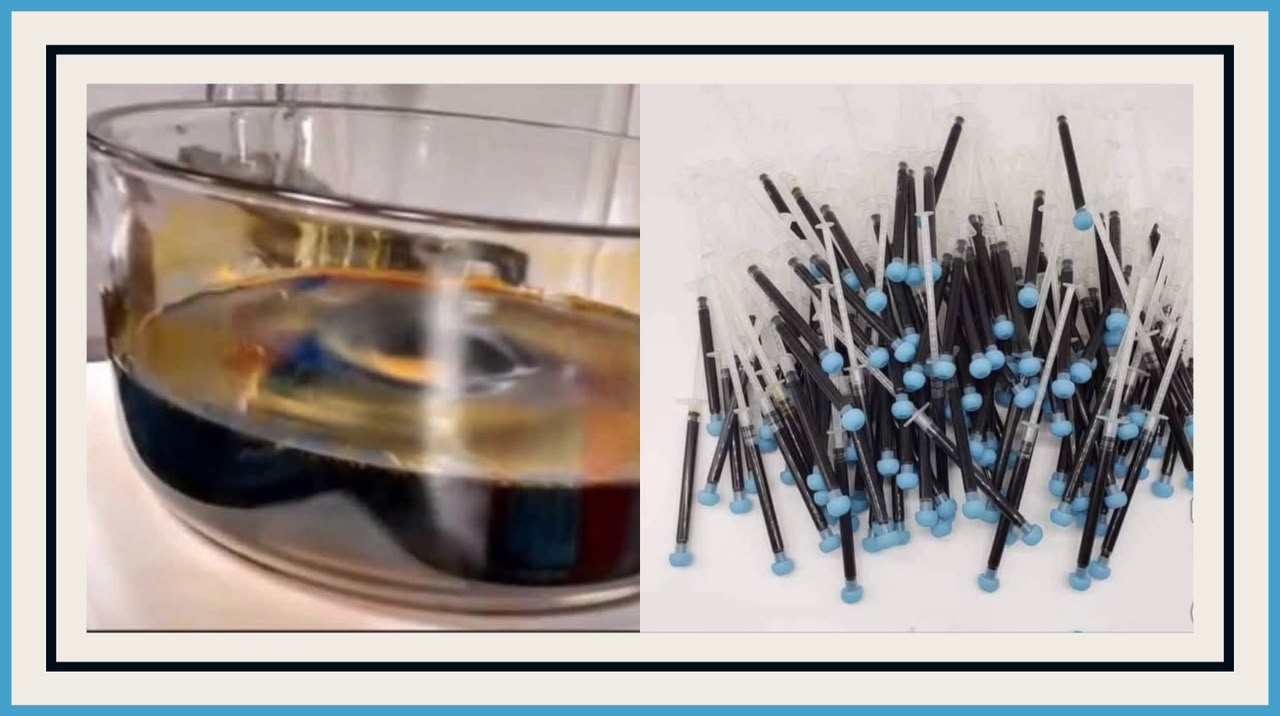
If you’ve been hitting cannabis pop-ups around the 518 lately, you might have noticed something making its way back onto the table, and no, I’m not talking about somebody’s old-school glass pipe from 1998. I’m talking about RSO!
Rick Simpson Oil, better known as RSO, seems to be making a serious comeback in the local cannabis scene. At least that’s what I’ve been noticing. About a year ago, I’d occasionally run into a vendor carrying it. These days, it seems like just about every pop-up I attend has at least one person offering it. Coincidence? Maybe. But I’m starting to think RSO is having its own little renaissance in the 518!
So, What Exactly Is RSO?
RSO is a highly concentrated, full-spectrum cannabis oil named after Rick Simpson, the Canadian cannabis activist who helped popularize it. Unlike your typical vape cartridge or dab concentrate, RSO is generally a thick, dark, sticky oil containing a broad range of cannabinoids and other compounds extracted from cannabis.
It’s traditionally associated with oral use, although products and intended applications can vary. A little goes a long way, and this isn’t exactly the product you want to mistake for a generous serving of honey!
Not All RSO Is Created Equal!
Here’s where things get important. Just because somebody has a syringe filled with dark cannabis oil doesn’t automatically make it quality RSO.
Different extraction methods are used, including alcohol-based extraction and hydrocarbon-based methods involving solvents such as butane or propane. Some methods use CO2, although CO2 extraction is not necessarily traditional RSO production.
So, which method should you look for?
Food-grade ethanol extraction, performed in a properly equipped professional facility with appropriate solvent recovery and quality controls, is one established approach. Properly controlled CO2 extraction is another professional method for producing cannabis extracts. The important thing isn’t simply the name of the extraction method; it’s the purity of the starting material, the equipment, the manufacturing standards, and the final laboratory results.
I would be especially cautious about products made using unknown solvents or improvised extraction methods. Some solvents are highly flammable, and improperly processed extracts can contain unwanted residual chemicals.
My advice? Know your supplier! Ask what extraction method was used, what solvents were involved, how they were removed, and whether the finished product has been independently tested. Look for laboratory results covering potency, pesticides, heavy metals, microbial contaminants and residual solvents where applicable. If somebody gets offended because you ask questions about what you’re putting in your body, that’s probably a pretty good reason to keep walking.
Why Are So Many People Interested in RSO?
This is where RSO gets particularly interesting. Across the cannabis community, people have shared personal experiences using it for a variety of medicinal and wellness purposes.
Some of the most commonly discussed reasons include:
Pain relief: People dealing with chronic pain often turn to RSO for potential relief.
Sleep: Its strong THC content makes it popular among people looking for help relaxing and getting a better night’s sleep.
Appetite: Particularly important for people struggling with appetite loss, including patients undergoing cancer treatments.
Nausea: Cannabis has an established medical research history involving nausea and vomiting, including symptoms associated with chemotherapy.
Muscle spasms: Some people report relief from muscle tension and spasms.
Relaxation: Many users report that RSO helps them unwind and manage stress.
One group that frequently comes up in conversations about RSO is cancer patients. Many patients undergoing treatment explore cannabis products because they’re looking for additional ways to manage pain, nausea, appetite loss and sleep difficulties. RSO has developed a particularly passionate following among people seeking those kinds of benefits.
Of course, everyone’s body responds differently, and people undergoing cancer treatment should discuss cannabis use with their healthcare providers, particularly because THC can interact with certain medications.
Is RSO Here to Stay in the 518?
From what I’ve personally been seeing at local pop-ups, I’d say RSO is definitely making a comeback. Whether it’s experienced cannabis consumers revisiting an old favorite or newer consumers discovering it for the first time, there’s clearly renewed interest.
And honestly, I’m glad to see people asking more questions about cannabis products and exploring different forms of cannabis beyond flower, vapes and concentrates.
But remember, quality matters. Know what you’re buying, know who’s making it, and don’t be afraid to ask questions. Especially when it comes to something you’re consuming for medicinal purposes.
RSO has a long history, a passionate following and a place in the conversation about cannabis and wellness. Whether this resurgence is a passing trend or the beginning of a permanent return remains to be seen.
One thing is for sure: the next time you’re walking around a 518 pop-up, don’t be surprised if you see a little dark oil making a big impression.
And if you do, remember what OG Strain always says: Know what you’re smoking, know what you’re consuming, and know who you’re getting it from!
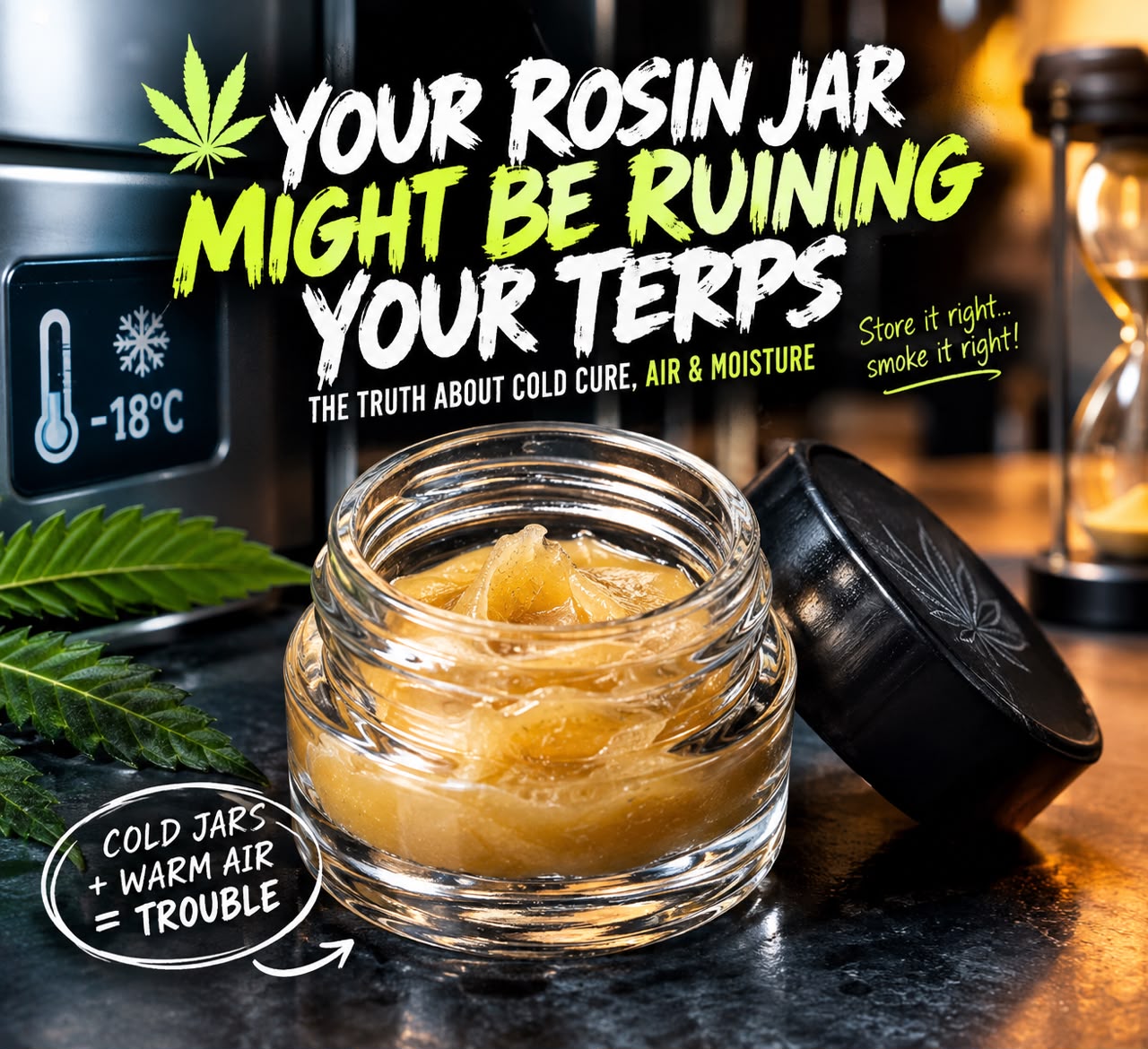
Let’s talk about something that doesn’t get nearly enough attention in the cannabis community: what happens AFTER you buy that beautiful jar of cold-cure rosin.
We spend plenty of time talking about genetics, extraction methods, flavor, consistency, and which strains deserve a permanent spot in our rotation. We debate the terps, admire the badder, and sometimes stare into a jar like we’ve just discovered buried treasure.
But how much attention are we paying to the container protecting that treasure?
I’ve noticed something while enjoying different brands of cold-cure rosin. Some come in jars that close securely and tighten down. Others have caps that never seem to tighten completely. You twist them, turn them, and wait for that satisfying point where everything feels secure. Instead, the lid has a little play left in it.
And that got me thinking.
Are these jars designed for curing? Are they supposed to allow air inside? Is there a legitimate reason for the difference? Or are we paying premium prices for premium concentrates packaged in containers that might not be doing the product any favors?
Let’s separate the science from the speculation, because there’s more happening inside that little jar than meets the eye.
THE ONE-HOUR RULE: WHY YOU SHOULDN’T OPEN COLD ROSIN IMMEDIATELY
If you’ve spent time around experienced solventless enthusiasts, you’ve probably heard the rule: take your cold-cure rosin out of the refrigerator or freezer and let it warm up before opening the jar.
Some people recommend roughly an hour, depending on the starting temperature, container, and amount of product. The principle is simple: let the sealed jar approach room temperature before opening it.
Why?
Condensation.
Remember pulling a cold drink out of the refrigerator on a humid summer day? Those little water droplets forming on the outside of the glass aren’t coming from inside the drink. They’re moisture from the surrounding air condensing on a cold surface.
Now imagine opening a cold rosin jar in a warm room.
Warm air carries water vapor. When that air meets cold surfaces inside the container, moisture can condense. You might not see obvious droplets, but that doesn’t mean moisture exposure is impossible.
And moisture is not something we want introducing unnecessary complications into our concentrates. It can affect texture and contribute to the crackling sometimes noticed when heating contaminated concentrate.
The solution? Let the sealed jar warm up before opening it. You’re reducing the opportunity for moisture to condense on the cold product.
A little patience can help protect the experience you paid for. Nobody wants their premium rosin going through an unexpected identity crisis because we couldn’t wait an extra hour!
OXYGEN: FRIEND OR FOE?
Now let’s talk about oxygen, because this is where the science sometimes gets mixed up.
Oxygen can contribute to oxidation, chemical reactions that gradually change the composition of cannabis concentrates. Some terpenes are volatile, meaning they can evaporate relatively easily, and some are susceptible to oxidation. Cannabinoids can also undergo chemical changes over time.
Heat, light, air exposure, and repeated temperature fluctuations can influence how a concentrate ages.
But here’s an important distinction: oxygen doesn’t automatically become more destructive just because your rosin is cold. Lower temperatures generally slow many chemical reactions. The main reason to warm a cold jar before opening is to reduce condensation and moisture exposure. Minimizing unnecessary air exchange is a separate, equally sensible storage consideration.
The Extraction Magazine guide to treating terpenes discusses protecting volatile terpenes and the importance of appropriate storage.
Think of your rosin like a prized classic car. You don’t leave the windows open during a rainstorm and then wonder why the interior isn’t looking so good. You protect what makes it valuable!
ARE THESE CURING JARS OR STORAGE JARS?
Here’s where my curiosity really kicked in.
Cold curing is a process used to develop a particular consistency in rosin. Depending on the material and technique, the product can develop that creamy, opaque, badder-like texture many solventless enthusiasts love.
But cold cure describes the process and resulting product, not a special type of jar.
There’s no universal rule that a curing jar must have a loose cap or allow continuous airflow. In fact, some producers cure rosin in sealed containers. 710 Labs’ live rosin badder information describes a process in which fresh-press rosin develops its badder-like consistency after being sealed in jars and left to cure at room temperature.
So, does a loose-feeling cap mean a brand is selling unfinished rosin in a curing jar?
Not necessarily.
A cap’s feel alone doesn’t tell us whether a container is intended for curing, whether the product is finished, or whether the jar is defective. Different closures have different designs, and some child-resistant mechanisms feel different from ordinary screw-top lids.
Which brings us to an important distinction.
CHILD-RESISTANT DOESN’T AUTOMATICALLY MEAN AIRTIGHT
A child-resistant closure is designed to make opening a container more difficult for young children. An airtight closure is designed to limit air and moisture exchange.
Those are two different jobs.
Some packaging systems are designed to accomplish both. Others may provide child resistance without the same level of airtight sealing. Packaging manufacturers even offer specific silicone sealing rings for concentrate jars, demonstrating that airtight performance is its own design consideration.
A lid that feels tight isn’t necessarily airtight, and a lid that has a little movement isn’t automatically defective. The actual design and condition of the seal matter.
Still, if a finished concentrate is intended to be stored for weeks or months, it makes sense to ask whether its packaging is appropriate for that purpose.
I don’t expect every jar to look identical. I do expect the packaging to perform the job it’s supposed to do.
And if you’re a producer, clear storage instructions can go a long way toward helping customers protect the product they’re buying.
HOW TO PROTECT YOUR ROSIN WITHOUT NEEDING A CHEMISTRY DEGREE
You don’t need a laboratory coat, safety goggles, or a PhD in Terpene Management to take better care of your stash.
Just keep a few practical principles in mind.
Follow the manufacturer’s storage instructions. Some concentrates benefit from refrigeration or freezing, while others have different recommendations.
Keep the jar closed while it warms up. If you’ve stored your rosin cold, allow it to approach room temperature before opening. An hour may work for some containers, but the time varies.
Minimize unnecessary air exposure. Open the jar when you’re ready to use it and close it promptly afterward.
Keep it away from heat and direct light. Both can contribute to unwanted changes in concentrate quality.
Use clean, dry tools. You don’t want to introduce moisture or contaminants into your product.
For an example of product-specific guidance, 710 Labs’ storage recommendations discuss freezer storage for certain products, along with allowing jars to warm before opening. That’s a good reminder that storage instructions should be tailored to the product rather than based on one universal rule.
And remember: a freezer isn’t a magic preservation chamber that excuses poor packaging. The container still matters.
THE BOTTOM LINE: YOUR TERPS DESERVE BETTER
Here’s what I want people to take away from this.
Cold-cure rosin deserves appropriate storage and packaging. Letting a cold jar warm before opening can help reduce condensation. Limiting unnecessary exposure to air, heat, and light can help preserve quality. And child-resistant packaging isn’t automatically proof of an airtight seal.
As for those caps that never seem to tighten all the way? That’s a legitimate reason to ask questions, but not enough by itself to declare a jar defective or a product unfinished.
I’d like to see more transparency from producers about their packaging, storage recommendations, and the intended use of their containers. Consumers shouldn’t have to guess whether their concentrate is being protected properly.
Because let’s be honest: when somebody spends their hard-earned money on premium solventless, the last thing they should have to worry about is whether the jar is doing its job.
We already have enough decisions to make choosing strains, comparing batches, and figuring out which terps deserve a spot in the rotation.
We shouldn’t need to become packaging engineers, too!
So keep your rosin stored properly, let that cold jar warm up before opening, and make sure the lid closes as intended.
And if opening your concentrate jar feels like you’re trying to crack a safe at Fort Knox, maybe it’s time to ask the manufacturer a few questions.
Because premium rosin deserves more than a premium label. It deserves packaging that protects what’s inside.
- OG Strain
Six jars went into the OG Strain laboratory. One came out wearing the championship belt.
Let me tell you something about Hudson Valley Green’s cold cure rosin: this stuff is fresh.
I recently made another trip to Hudson Valley Green and came home with six different cold cure rosin strains. And because apparently I enjoy making difficult decisions for myself, I decided to rank all six from my least favorite to my favorite.
Now before anybody reads too far into that last sentence, let me make something crystal clear:
My least favorite was still top-shelf rosin.
This isn’t one of those reviews where I have to find something nice to say about five jars while secretly wondering what happened to the sixth. Every one of these jars showed me that Hudson Valley Green knows what they’re doing with solventless. The freshness, moisture, texture, aroma and terpene expression were all there.
But I’m OG Strain. I’m not here to hand out participation trophies.
I’m here to tell you which ones made my taste buds stand up and say, “HOLY SHIT, WHAT IS THAT?”
And lately, I’ve been chasing a very particular kind of flavor: loud, funky, sharp, unusual flavors that grab you right on the side of the tongue and don’t politely leave.
So let’s rank them.
⸻
#6 — RUBBERBAND MIMOSA
The one that just wasn’t my cup of tea
I’m going to start with the one I liked the least, and I’m not going to dance around it.
Rubberband Mimosa wasn’t my favorite.
And that’s strictly a matter of personal preference.
The quality? Absolutely there.
The rosin? Top shelf.
The flavor? That’s where OG Strain and Rubberband Mimosa had an irreconcilable difference of opinion.
This one had a strong, potent flavor that struck me as having a distinctly wine-like character. It was bold, it was noticeable, and it definitely wasn’t lacking in personality. In fact, I’m sure there are plenty of people who would absolutely love this profile.
I just wasn’t one of them.
And that’s an important distinction when you’re reviewing cannabis: not liking a particular flavor doesn’t mean the product isn’t good.
If you put a low-quality jar next to this one, I’m still reaching for the Hudson Valley Green every single time.
Rubberband Mimosa simply landed at the bottom of my personal flavor ranking.
OG Strain verdict: Excellent-quality cold cure. Strong, distinctive flavor. Just not my favorite flavor profile.
⸻
#5 — RAINBOW BELTS
A flavorful rosin with plenty to say
Rainbow Belts brought a completely different personality to the lineup.
The rosin in my jar had a noticeably more saucy consistency compared with some of the chunkier cold cures in this group. But don’t let that fool you into thinking it was lacking anything.
Quite the opposite.
This stuff was loaded with flavor and aroma.
Rainbow Belts is generally known for a sweet, fruity, candy-like profile, and that certainly fits the kind of experience I got from this jar. The nose was strong, the flavor was sweet and fruity, and the terpene expression was immediately noticeable.
This was the kind of cold cure where you open the jar and your nose knows there’s something serious happening before you even take a dab.
And the effects were enjoyable and satisfying.
Would I buy it again?
Absolutely.
But this is where ranking six excellent jars gets difficult. Sometimes a strain can be really damn good and still end up toward the bottom simply because the competition is brutal.
Rainbow Belts didn’t disappoint me.
It just had to compete.
OG Strain verdict: Sweet, fruity, aromatic and terp-heavy. A very solid cold cure that brings plenty of personality to the table.
⸻
#3 TIE — RAINBOW SHERB
The fruit-forward contender
Rainbow Sherb earns a spot in a tie for third, and honestly, I almost feel bad putting it this low.
This is another strain where the flavor profile leans heavily toward the fruit-and-sweet side. Published strain profiles commonly describe Rainbow Sherbet as fruity, sweet and tropical, with notes that can include berry, orange and apricot.
My experience with the Hudson Valley Green cold cure was exactly why this jar deserves respect: flavor, aroma and effects were all there.
It was another one of those jars where the freshness was immediately apparent. The rosin had that moist, creamy, alive-looking quality that makes you wonder if somebody forgot to tell the jar it was supposed to sit around for a while before I got my hands on it.
Rainbow Sherb delivered a flavorful, enjoyable experience and is absolutely something I’d buy again.
But here’s the problem:
There were six jars in this competition.
And when everything on the table is bringing its A-game, somebody has to be third.
OG Strain verdict: Fruity, sweet, terp-rich and seriously enjoyable. Easily good enough to be somebody else’s number one.
⸻
#3 TIE — GARLIC ICE CREAM CAKE
Savory meets dessert
Tied for third with Rainbow Sherb is Garlic Ice Cream Cake.
And this one proves exactly why I love reviewing cannabis.
Because on paper, garlic + ice cream cake sounds like somebody accidentally dropped dinner into the dessert menu.
But in cannabis?
It can work.
Garlic Ice Cream is commonly associated with garlic-forward genetics crossed with creamy dessert lines, producing the kind of savory-meets-sweet profile that makes the strain particularly interesting for flavor chasers.
And that’s exactly why this one belongs in the top half of this ranking.
It brought a completely different personality to the lineup. Instead of simply screaming fruit or sweetness, it had that deeper savory, creamy character that makes you stop for a second and analyze what your taste buds are actually experiencing.
The effects were solid, the quality was undeniable, and the jar absolutely earned another purchase.
Honestly, if I had never tried the other two jars that were still sitting ahead of it, I’d probably be sitting here telling you that Garlic Ice Cream Cake was the greatest thing since sliced bread.
But I had six jars.
And I had to rank them.
OG Strain verdict: Savory, creamy, funky and seriously good. Another strain that could easily be somebody else’s number one.
⸻
#2 — CRASH GLOW
The one that nearly stole everything
Now we’re getting serious.
Crash Glow was not far behind my number-one pick at all.
This one grabbed me because of that sharp, unique flavor I can’t get enough of lately.
And there’s something about that type of flavor that keeps bringing me back. It’s not simply sweet. It’s not just fruity. There’s a sharper, funkier quality that makes the flavor memorable.
Something that hits you right on the side of the tongue.
That’s my kind of rosin.
Published profiles for Crash Glow describe a complex combination of fruity, citrus, creamy, doughy, savory and gassy characteristics, which helps explain why this cultivar can have such a layered personality.
But no online strain description can completely explain what comes out of an individual jar.
And this jar from Hudson Valley Green?
It was loud.
The aroma was powerful. The flavor was distinctive. The cold cure itself was fresh, moist and creamy, with the kind of texture that makes it obvious you’re dealing with quality solventless.
The effects were just as impressive.
Crash Glow absolutely delivered.
And here’s where things get interesting:
It came damn close to taking the whole damn thing.
OG Strain verdict: Loud, complex, funky and memorable. A serious contender that came within striking distance of the top spot.
⸻
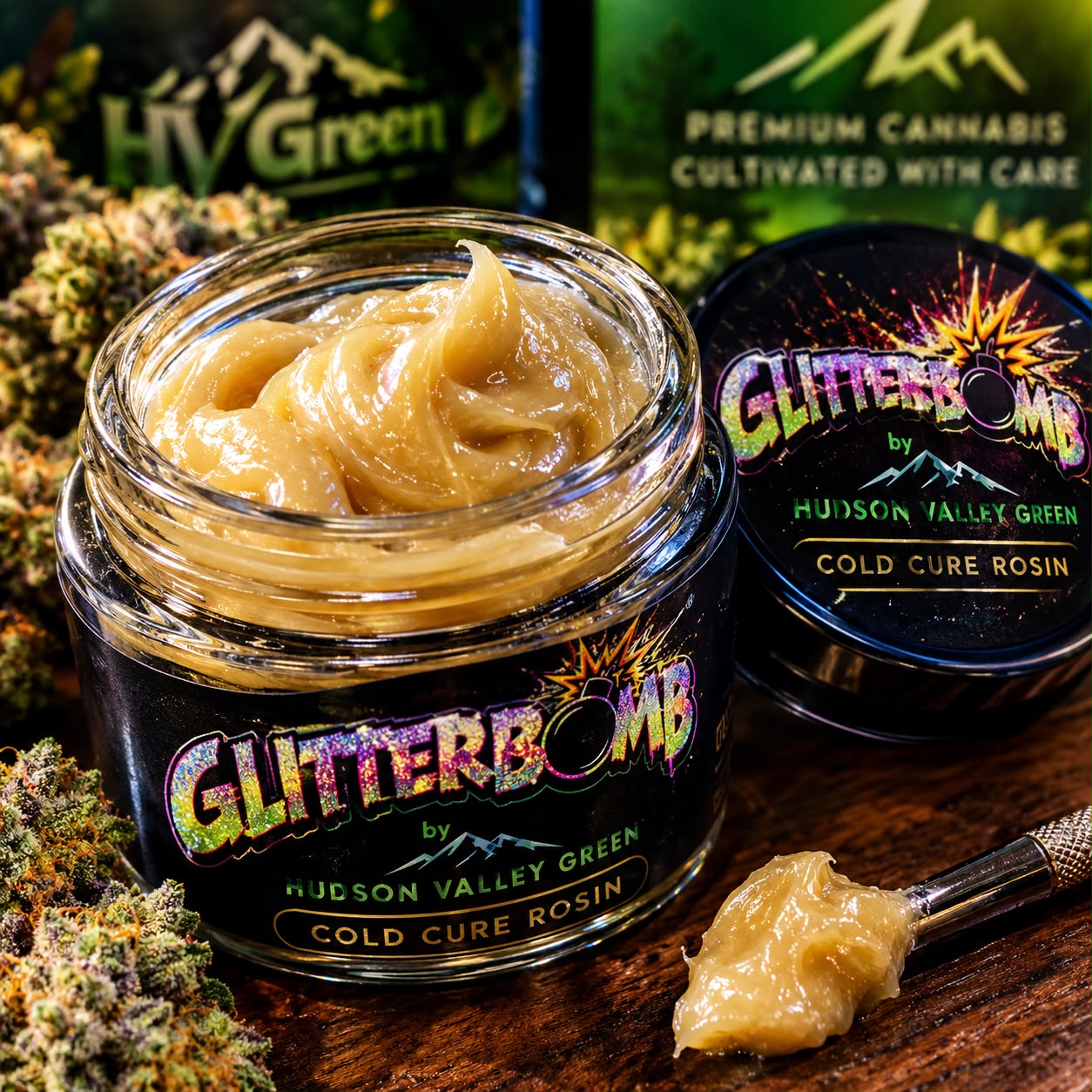
🏆 #1 — GLITTERBOMB
ROSIN STRAIN OF THE MONTH
The one that took the whole damn cake
Ladies and gentlemen…
We have a winner.
Out of all six Hudson Valley Green cold cure rosin strains I tried from this run, Glitterbomb stood above the rest.
This stuff is LOUD.
Not regular loud.
Not “Yeah, I can smell it.”
I’m talking open-the-jar-and-the-room-knows-about-it loud.
And then you taste it.
HOLY SHIT.
The flavor is so unique and so powerful that I honestly struggled to come up with a comparison that didn’t sound ridiculous.
Then I finally figured it out:
It cuts into your taste buds like extra-sharp cheddar cheese.
Now, before somebody starts thinking OG Strain has discovered cannabis-infused macaroni and cheese, I’m not saying Glitterbomb tastes like cheese.
I’m talking about the sensation.
That sharpness.
That punch.
That way a really aged, intensely flavored cheese can hit your tongue and immediately announce itself.
That’s what this rosin does.
Glitterbomb doesn’t whisper.
It doesn’t politely introduce itself.
It kicks open the door, walks into your mouth, and starts rearranging the furniture.
Glitter Bomb is commonly associated with a Grape Gas and OGKB Blueberry Headband lineage, with public strain profiles describing combinations of grape, blueberry, berry, gas, citrus and earthy notes.
But here’s the thing:
None of that tells you what this particular jar from Hudson Valley Green tasted like to me.
And that’s why the personal experience matters.
The Hudson Valley Green Glitterbomb was loud, funky, flavorful and incredibly potent-feeling.
The effects were insane.
The flavor kept pulling me back.
And that sharp, unusual character is exactly what I’ve been looking for in rosin lately.
This is the kind of concentrate where you take a hit and immediately think:
“Yep. That’s different.”
That’s what separates memorable cannabis from cannabis that is simply good.
And Glitterbomb was memorable.
Very memorable.
⸻
THE FINAL OG STRAIN SCORECARD
After working my way through all six jars, here’s where they landed:
🥇 #1 — Glitterbomb
🏆 ROSIN STRAIN OF THE MONTH
🥈 #2 — Crash Glow
🔥 A damn-near champion
🥉 #3 — Rainbow Sherb
🍬 Fruity, sweet and seriously solid
🥉 #3 — Garlic Ice Cream Cake
🧄🍦 Savory, creamy and funky
#5 — Rainbow Belts
🌈 Sweet, fruity and terp-heavy
#6 — Rubberband Mimosa
🍷 Quality was there; the wine-like flavor just wasn’t for me
⸻
THE BOTTOM LINE
Here’s what I really want people to take away from this ranking:
This isn’t a list of good rosin versus bad rosin.
This is a list of six good jars competing against each other.
Even the strain I liked the least was still clearly high-quality cold cure rosin. My ranking is based on my personal preference for flavor, aroma, texture and effects, not a declaration that one strain is objectively better than another.
And Hudson Valley Green absolutely gets my OG Strain approval for the quality of this cold cure lineup.
The rosin was fresh.
The consistency was moist and creamy.
The aromas were loud.
The terpene expression was there.
And most importantly, these jars actually had personality.
That’s what I’m chasing.
I don’t want every jar to taste exactly the same.
Give me the funky stuff.
Give me the sharp stuff.
Give me something that makes me stop mid-sesh and say, “What the hell am I tasting right now?”
That’s what Glitterbomb did.
That’s what made this particular run so damn enjoyable.
I’ve also seen the flower from Hudson Valley Green, and what I saw looked damn good. But lately, I’ve been deep in my cold cure rosin era, so that’s what we’re talking about today.
Six jars.
Six personalities.
One champion.
And for this run, according to OG Strain…
GLITTERBOMB IS THE COLD CURE ROSIN STRAIN OF THE MONTH.
Hudson Valley Green brought the fire. OG Strain just had to figure out which fire burned the brightest.


TEXAS JUST SENT A MESSAGE TO POLITICIANS: DON’T MESS WITH OUR CANNABIS! DID THE CANNABIS MOVEMENT JUST HELP TURN THE LONE STAR STATE BLUE?

RSO: Is Rick Simpson Oil Making a Comeback in the 518?

Trim Jail to Homemade THC Cookies: Don’t Throw Away Your Trim When You Can Turn It Into Something Delicious!

She Didn’t Tiptoe In — OG Granny Blew the Door Off the Internet 💥🌿

“Damn Sam”, The Man Who Kept the 518 Lit (and Safe) Before It Was Legal to Say “Lit”

Tokalotapot & Cannafae: The Couple That Made Weed Legal (Not Really, But It Feels Like It)
-
 Cannabis Hall Of Fame10 months ago
She Didn’t Tiptoe In — OG Granny Blew the Door Off the Internet 💥🌿
-
 Cannabis Hall Of Fame8 months ago
“Damn Sam”, The Man Who Kept the 518 Lit (and Safe) Before It Was Legal to Say “Lit”
-
 Cannabis Hall Of Fame1 year ago
Tokalotapot & Cannafae: The Couple That Made Weed Legal (Not Really, But It Feels Like It)
-

 Cannabis Hall Of Fame1 year ago
Dope as Yola: From the Bottom to Cannabis Hall of Fame
-

 Community10 months ago
Empire State Cannabis Cup: An OG Strain Community Walkthrough
-

 Community1 year ago
🔥 HARVEST HYSTERIA: WHERE THE BUD AT, NEW YORK?!
-

 Community1 year ago
From Soil, Struggle, and Soul: Hudson Valley Green Wins Big at the Palenville Cannabis Cup”
-

 Community3 months ago
STONER MAMA NICOLE Breaking Stigma, One Laugh at a Time